Ecoembes

Content Strategy & Editorial Systems
for Social Media

ART DIRECTION - SOCIAL MEDIA STRATEGY - MOTION & GRAPHIC SYSTEMS
Client
Ecoembes
 
Rol
Content Strategy 
Editorial Framework Design
Art Direction
Motion Design & Animation
Visual Systems Development
Video Editing & Postproduction
 
Creative Copywriter
Daniel Vega
 
Designer
Jordi Portillo
 
Social Media Strategy
Elena Vega
Teresa Guilleuma
Irene Hernández
Teresa Oca
Julio Fernández-Sanguino


Tools
Adobe Creative Suite
AI-assisted tools
Ecoembes works in a complex and highly visible environment. It operates under strong regulation, public scrutiny and constant media attention.

In this context, communication cannot focus only on creativity. It must build trust, explain processes clearly and respond to real concerns from citizens and companies.

In 2025, the brand faced an important moment. New environmental regulations, public debate around recycling targets and the future implementation of the SDDR system required a more solid and transparent communication approach. At the same time, Ecoembes had just launched a renewed brand identity and purpose:

“Por un futuro sin residuos”.
(For a waste-free future)

My role was to help translate that purpose into a structured, sustainable content ecosystem for social media. The objective was not to create isolated posts, but to design a long-term editorial system that could support reputation, educate citizens, reinforce relationships with companies and adapt to different platforms without losing coherence.

From the beginning, the project was approached as a strategic and visual framework.

Strategic context

The 2025 strategy was built on a clear premise: social media had to become a space for dialogue and leadership.

The content needed to do three things at the same time. It had to reinforce Ecoembes as a trusted institution. It had to explain the recycling system in a transparent way. And it had to expand the conversation beyond recycling, towards circularity, reduction and ecodesign.

This meant working with three major audiences in parallel: citizens, companies and potential employees.

This meant working with three major audiences in parallel: citizens, companies and potential employees.

Editorial architecture

The content ecosystem was organized into five editorial territories. These territories were flexible and allowed us to evolve content during the year without losing direction.

This pillar focuses on strengthening the reputation of Ecoembes as an organization. The content supports corporate communication, employer branding and long-term positioning.

This pillar aims to improve public trust in the recycling system. The content explains how the system works, how materials are managed and what impact is generated.

This pillar is aligned with the purpose for a waste-free future. It highlights actions that go beyond recycling, such as reducing, reusing, repairing and rethinking consumption habits.

This pillar focuses on research, innovation and applied solutions within the circular economy. Through initiatives like The Circular Lab, it communicates entrepreneurship, technological development and packaging design strategies that aim to reduce waste and improve environmental systems.

This pillar covers environmental topics and sustainability challenges. The content informs and educates about climate, biodiversity and responsible practices.

Each content line was developed to respond to one or more of these territories.

From strategy to visual system

The pieces were visually simple in structure, but carefully designed to combine motion graphics, light 3D elements, typography and editing. The goal was to make complex information accessible without losing credibility.

I translated strategic principles into modular visual systems that could scale across formats and platforms.

Recurring formats were designed as adaptable templates. This allowed consistency while keeping space for creative evolution and collaboration with illustrators, creators and internal teams.

Infinite Piece

Infinite Piece is a recurring animated format that shows the complete recycling cycle of a specific type of packaging. From purchase to disposal, and finally to its transformation into a new product.

Each edition features a different illustrator. I handled motion design and animation, ensuring coherence in timing, rhythm and narrative clarity. It visually demonstrates circularity in a clear and understandable way.

Material Science

This piece focuses on explaining how a specific package is composed of two or more recyclable materials.

The packaging rotates on its axis, allowing viewers to clearly identify each component. As it turns, on-screen information appears on both sides, indicating which elements of the packaging can be recycled and where they should be disposed. The piece helps users understand how to recycle that packaging correctly in real life.

Recycling Transforms

This piece shows how a single package can be transformed into different objects through recycling.

The visual concept is built around the silhouette of the original container. Instead of making the packaging disappear, its shape remains present on screen. Through that silhouette, new objects gradually appear, revealing what can be created from the same recycled material.

The viewer understands that every new object comes from that initial package. The objective is to make circularity easy to visualize.

Recycling FAQs

Ecoembes developed AIRE, an AI-powered assistant integrated into its digital ecosystem. It helps citizens resolve doubts about recycling in real time.

We transformed AIRE into a visible social media character. Through Instagram Stories, users could send questions about recycling. Each month, AIRE appeared with a different visual adaptation depending on the time of year.

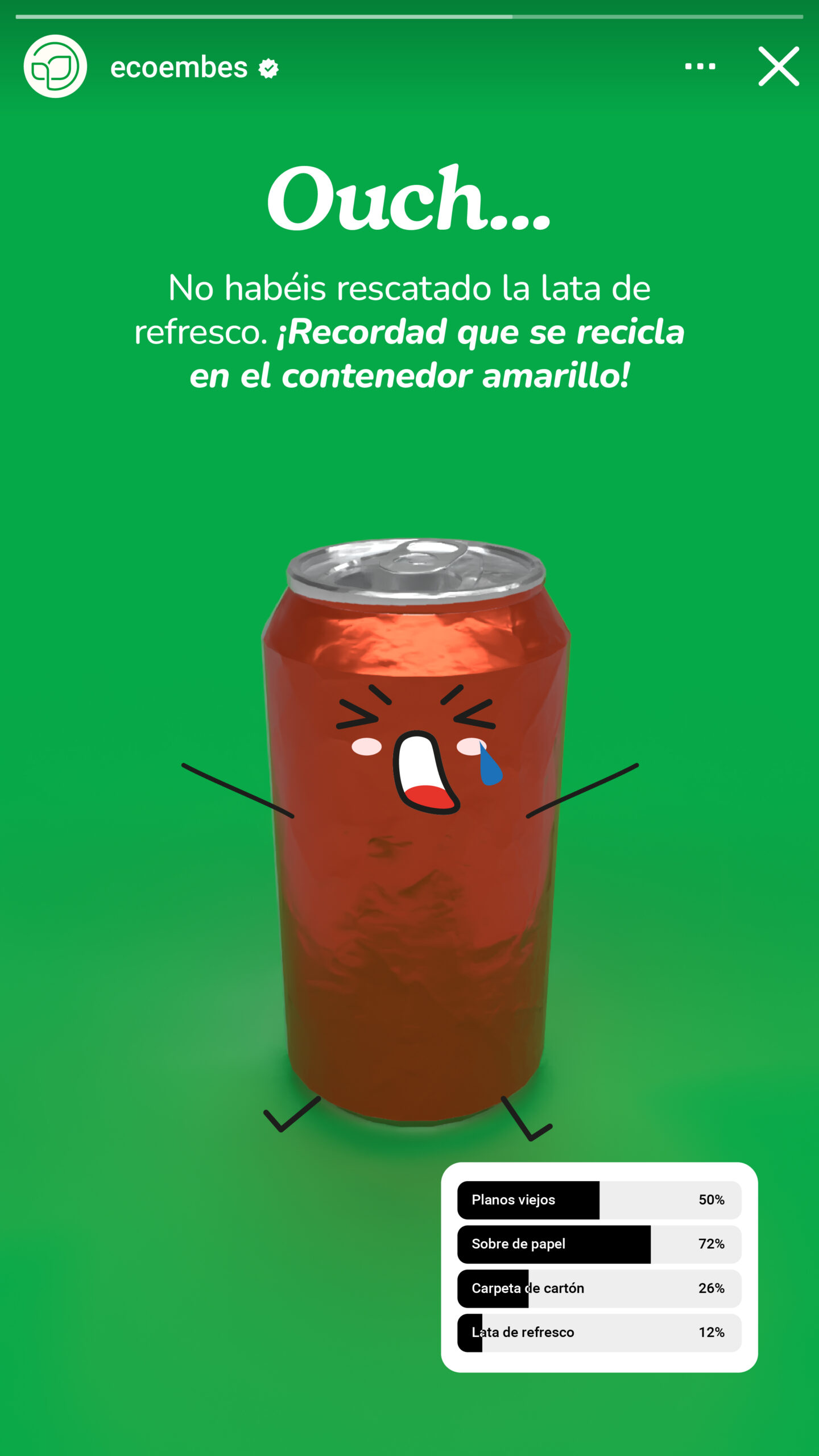
Rescue Operation

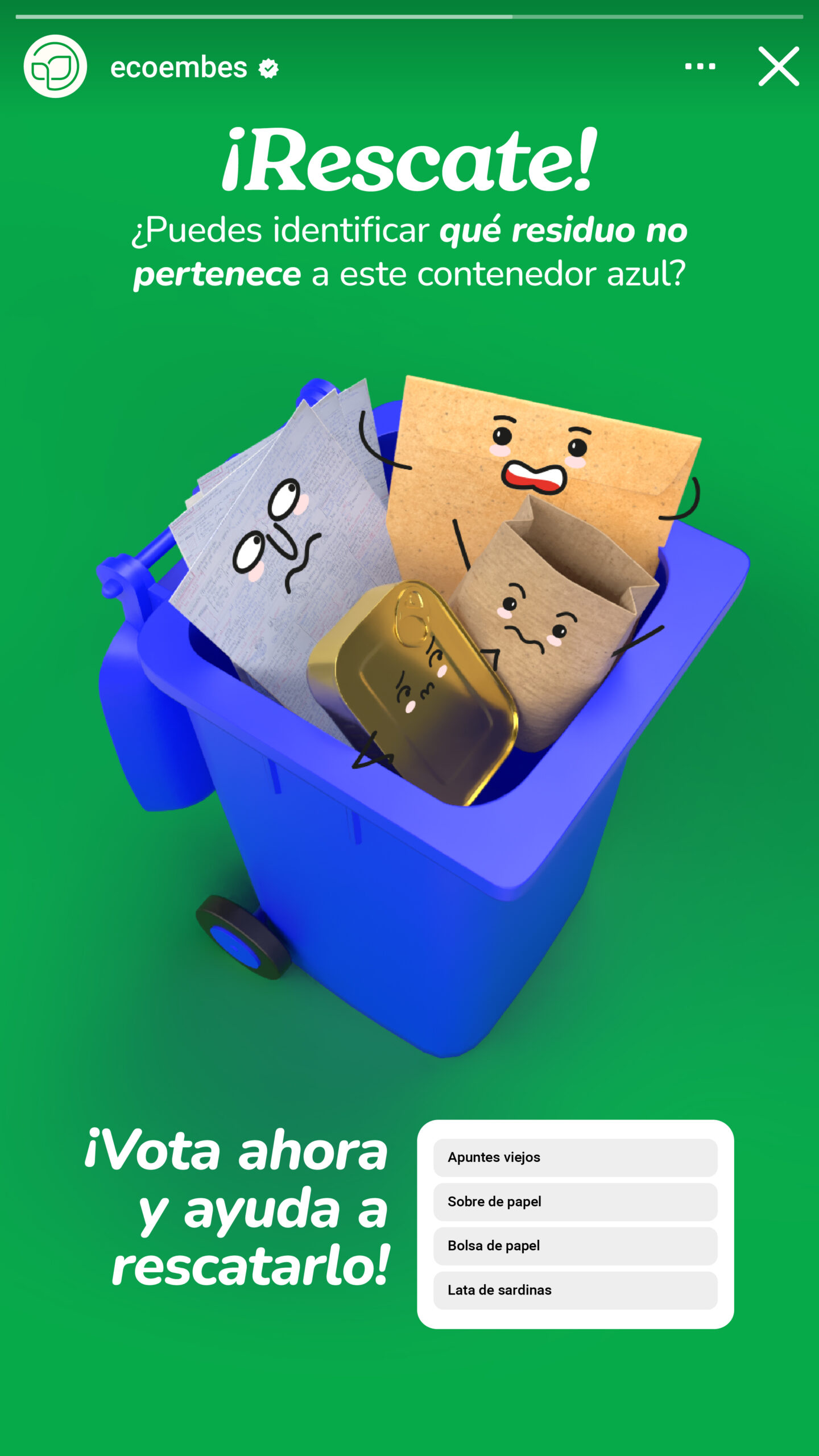
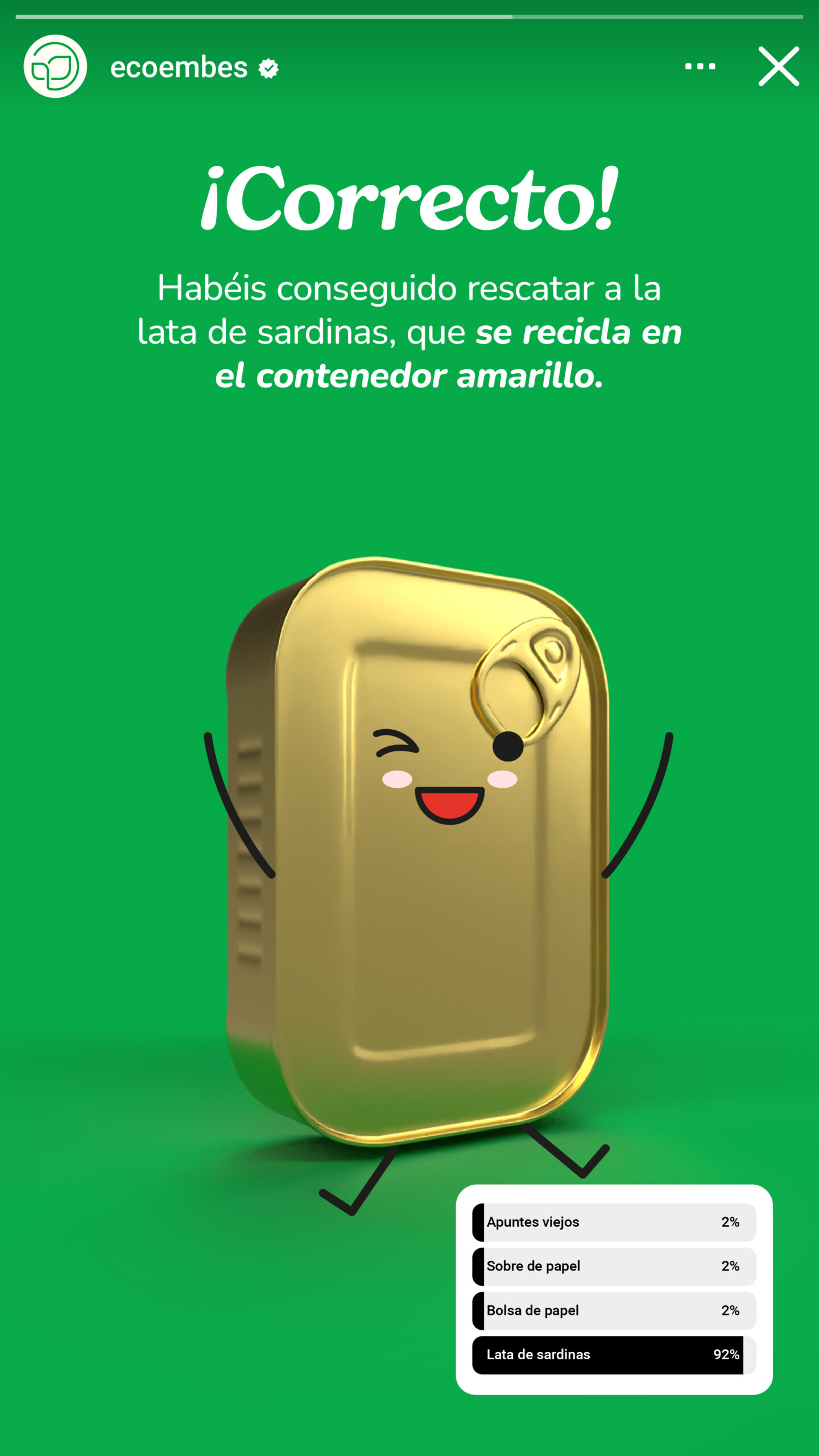
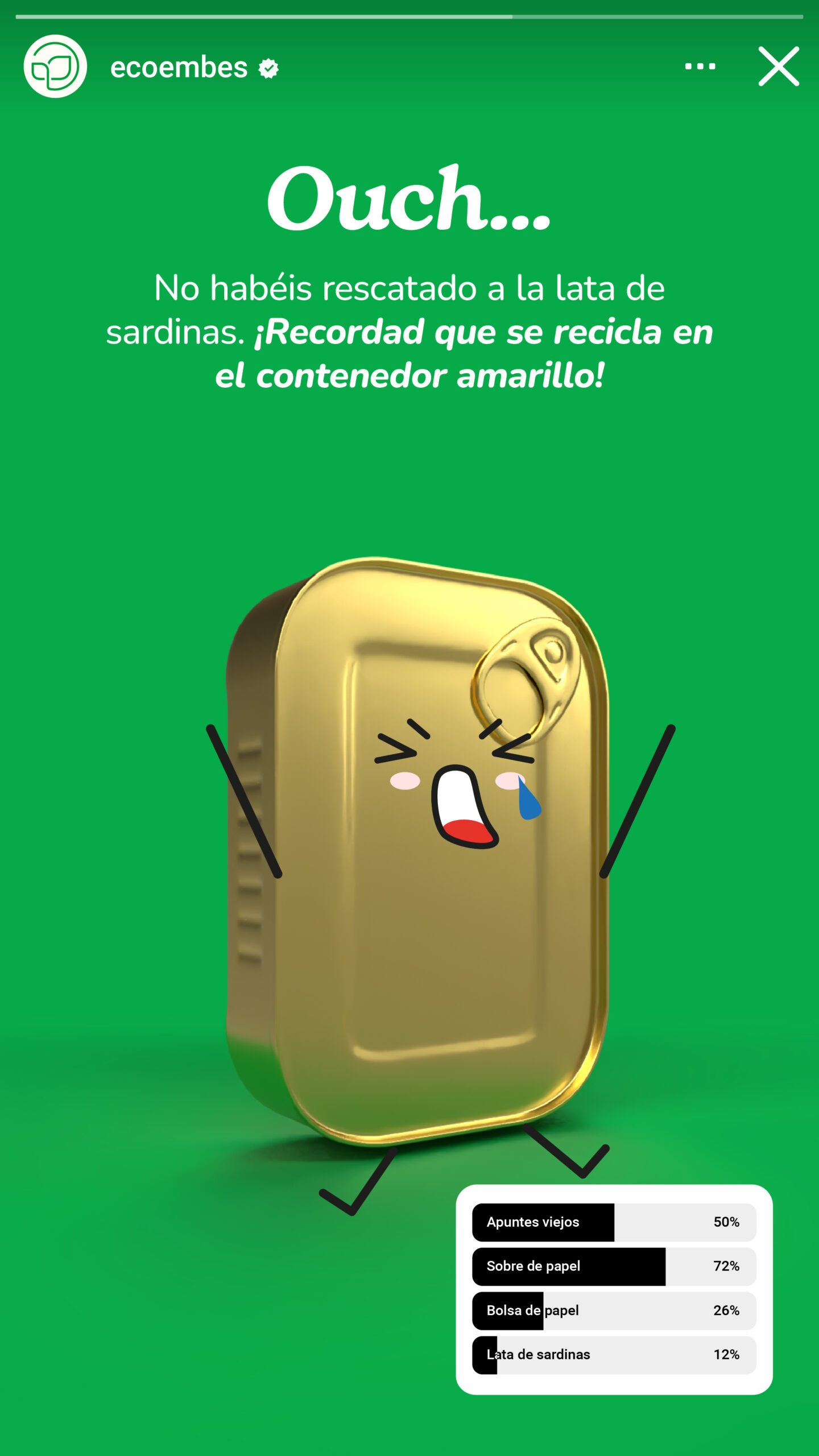
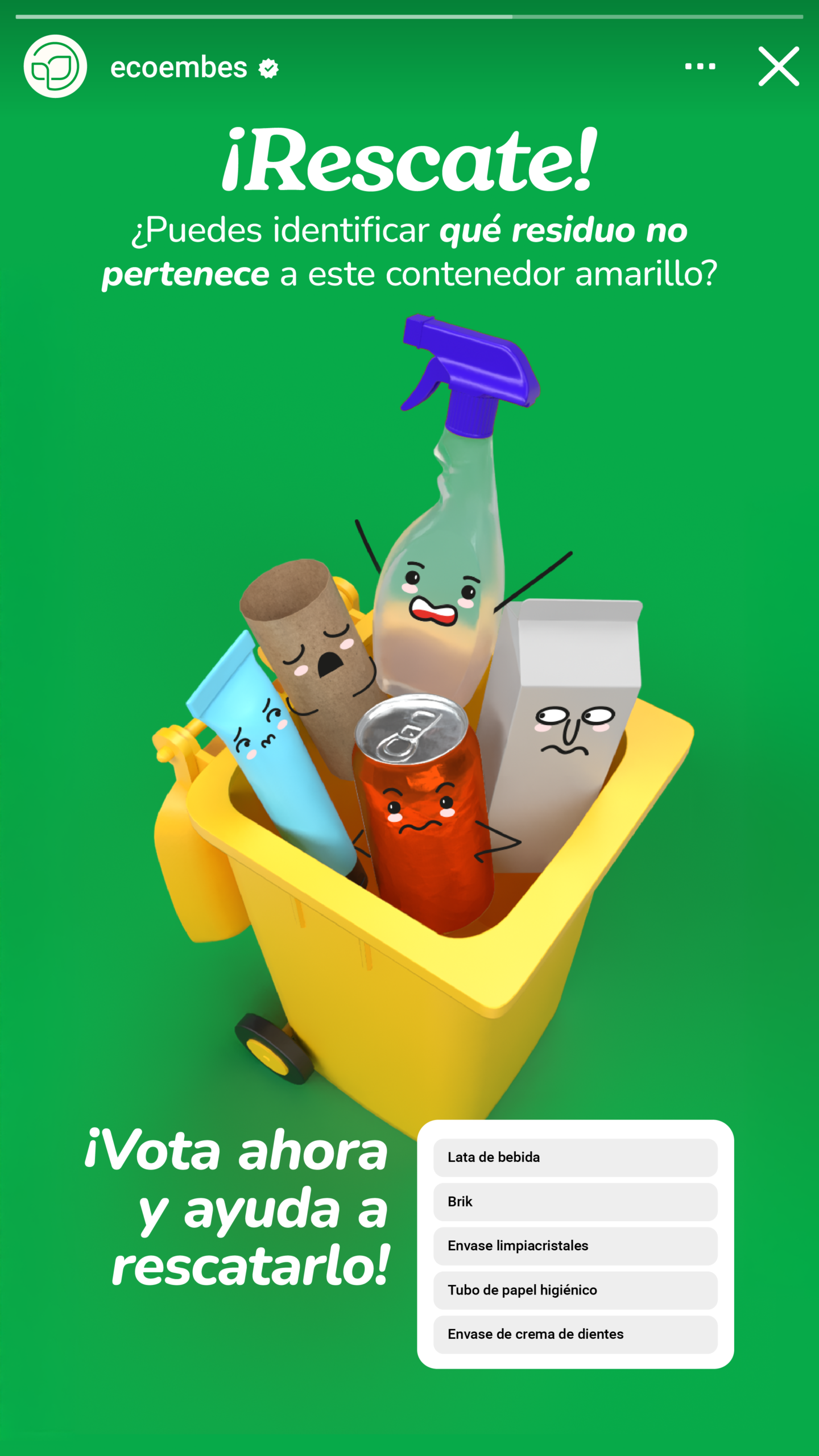
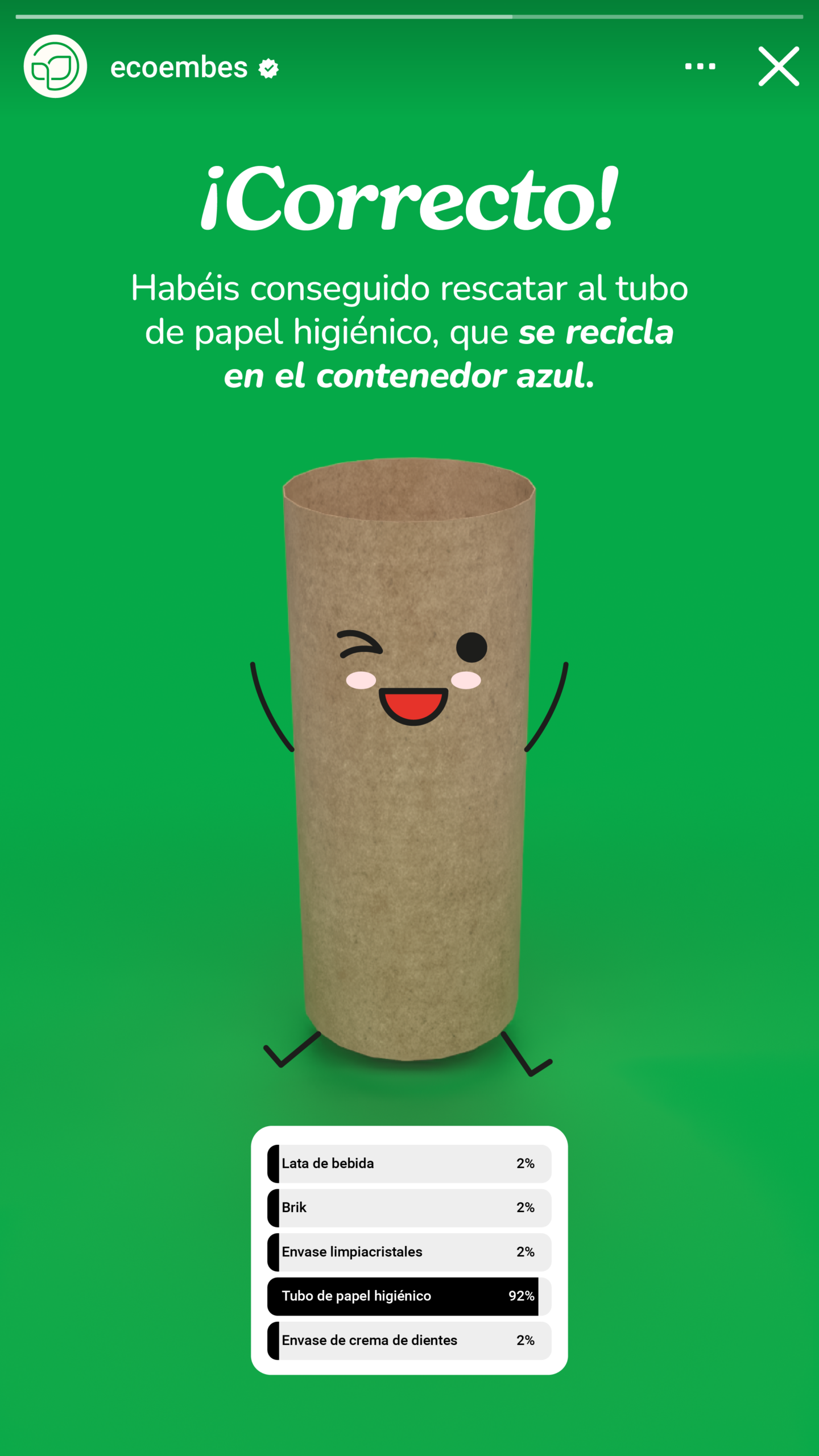
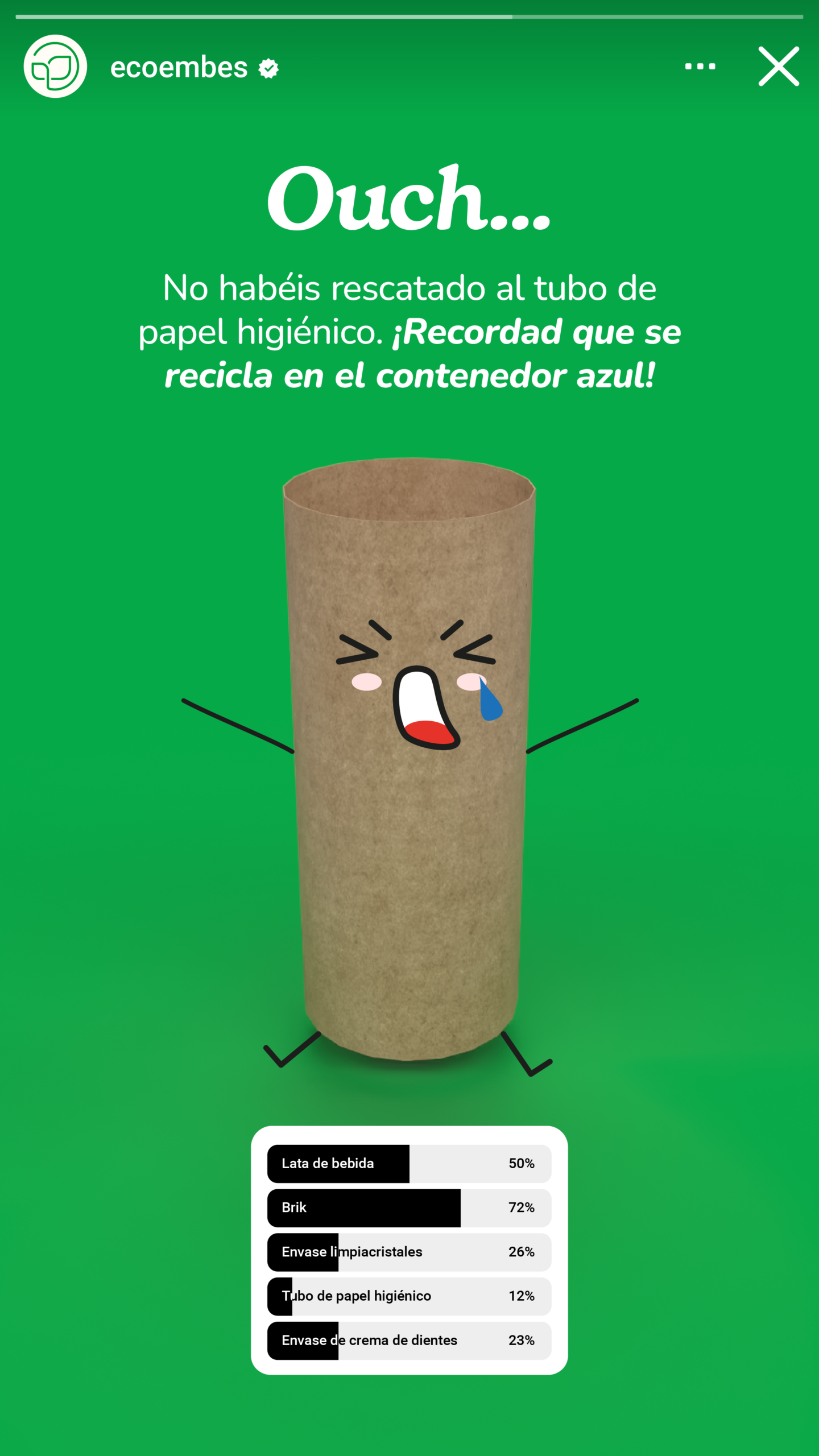
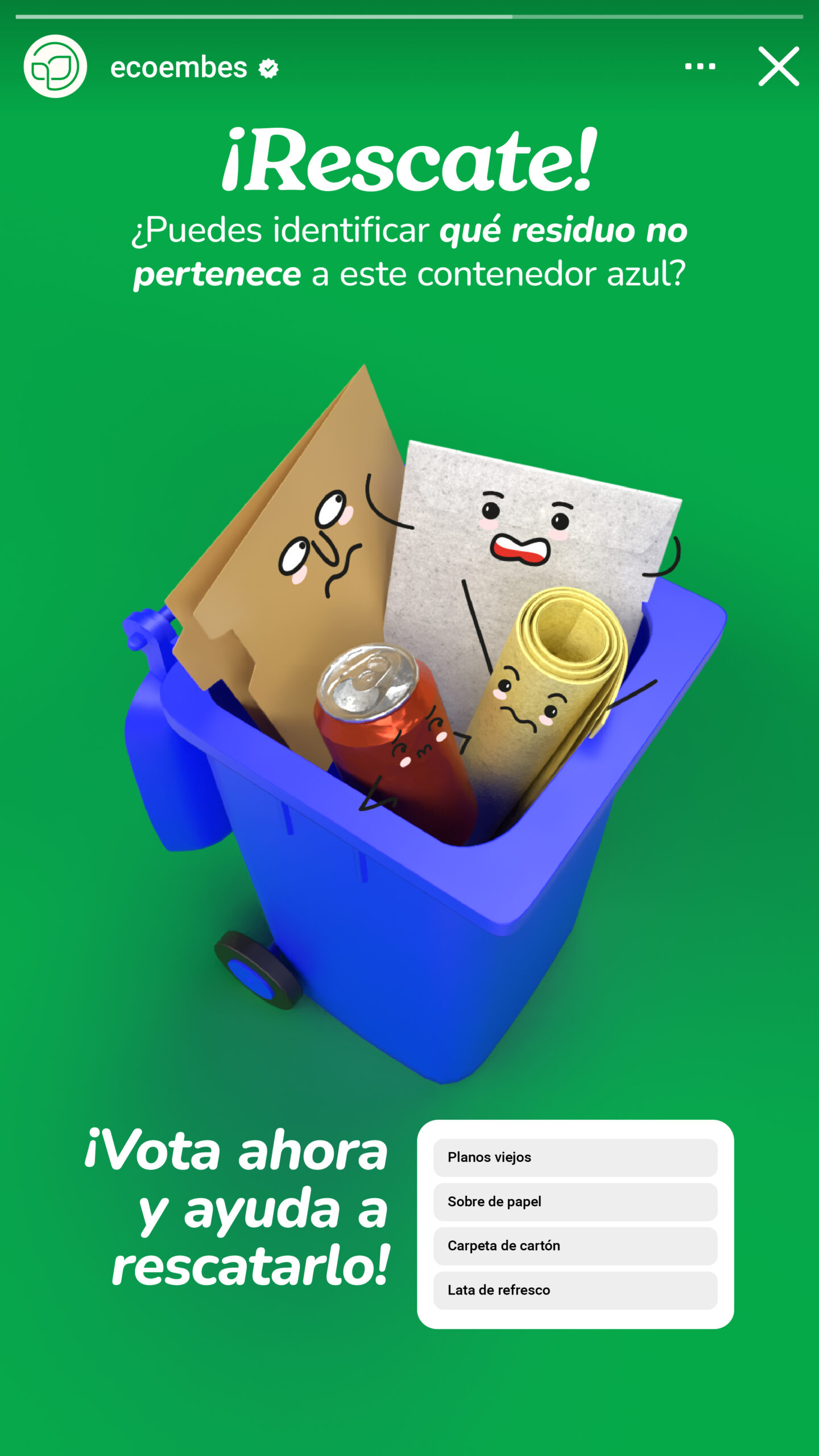
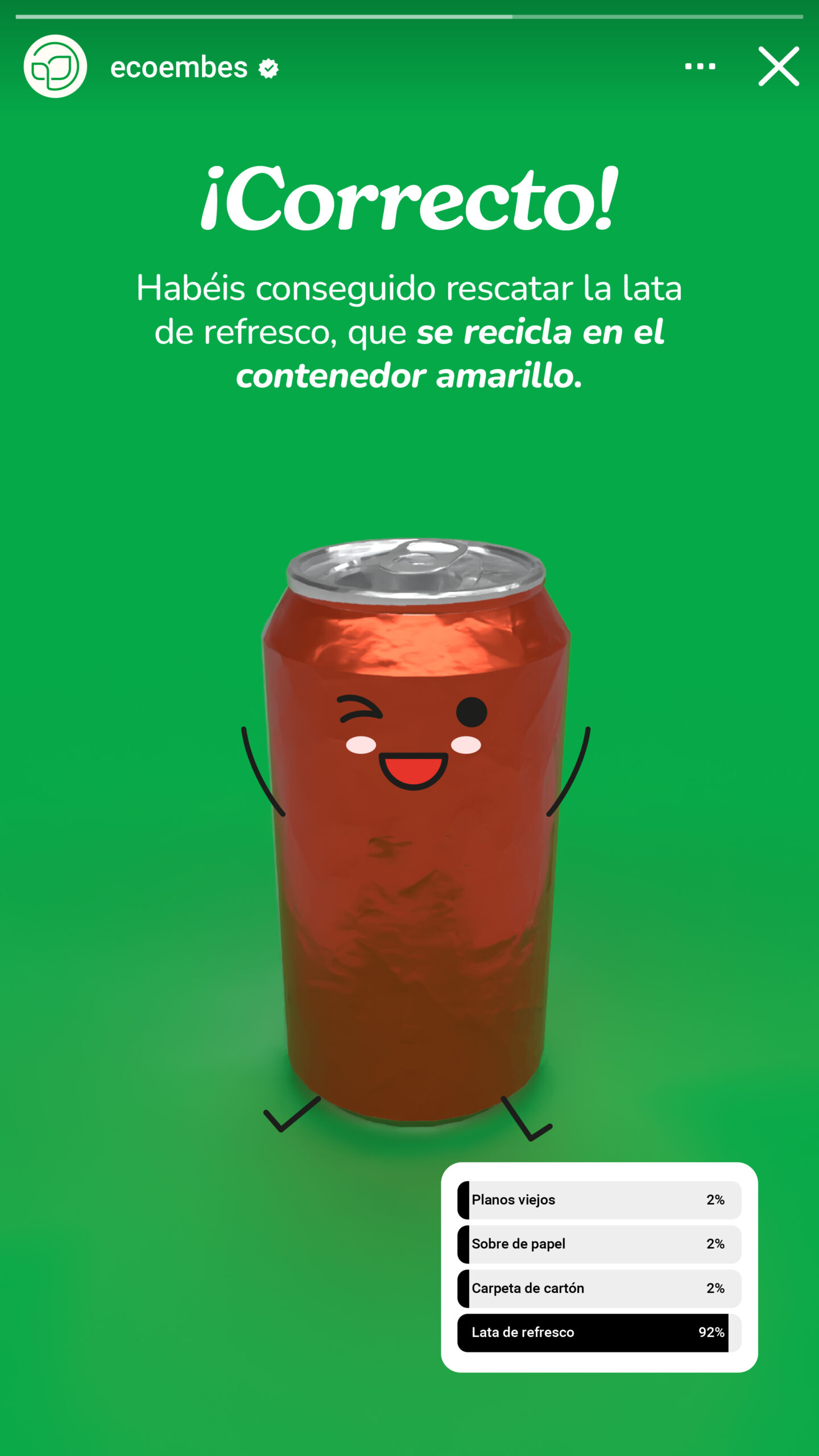
This interactive Stories format invites the audience to actively “save” a package that has been placed in the wrong container.

Users are asked to identify which item does not belong in the bin. Through the voting feature, they decide which packaging should be rescued. The outcome depends directly on the audience’s response: if the correct option is selected, the package is saved and its proper recycling destination is explained. If not, the piece reveals the mistake and reinforces the correct disposal behavior.

The narrative transforms a common recycling error into a small mission. The objective is to turn passive information into participation. 

Mockup_Stories_A_Story_1
Mockup_Stories_A_Story_2
Mockup_Stories_A_Story_3
Mockup_Stories_Story_1
Mockup_Stories_Story_2
Mockup_Stories_Story_3
Mockup_Stories_B_Story_1
Mockup_Stories_B_Story_2
Mockup_Stories_B_Story_3

Sustainable Combinations

Inspired by the mechanics of a slot machine, this video format presents sustainability as a combination of everyday decisions.

Three rotating columns simulate a game dynamic. Each column represents a different variable: type of waste, sustainable action and positive environmental impact. When the columns stop, a “combination” appears, visually connecting behavior with consequence.

Ecoembes from the Inside

These pieces focus on company culture, internal initiatives and the daily work behind the recycling system. Instead of corporate messaging, the format gives space to employees and partner companies to share their own experiences, processes and perspectives.

My role centered on video editing and post-production, shaping narrative structure, pacing and visual coherence. I worked on transforming interviews and internal footage into clear, engaging stories aligned with the brand’s tone and editorial system.

Vamos a darle una vuelta

Vamos a darle una vuelta (Let’s Rethink It) is a long-form YouTube and LinkedIn Live format focused on conversations around circular economy and sustainability.

In each session, Ecoembes experts engage with industry professionals to discuss current challenges, innovation, regulation and future perspectives. The format positions Ecoembes as an active voice within the sector, not only as an institution but as a participant in the broader sustainability dialogue.

Each session was transformed into modular short-form content. Key insights were extracted and adapted into shorter clips, extending the lifespan and impact of every conversation.

Designing the editorial system for Ecoembes meant working at the intersection of strategy and execution.

The objective was not to create visually complex pieces, but to build a content structure that could sustain credibility over time. Every format, from short interactive stories to animated explainers and live conversations, was designed to support a broader narrative about circularity, transparency and shared responsibility.

The visual language was intentionally accessible. The animations are simple in structure, but carefully built through motion, light 3D elements and precise editing. This allowed us to translate technical topics into content that feels understandable and relevant for different audiences.