When an icon makes history

A visual archive of design,
culture and brand evolution

ART DIRECTION – EDITORIAL DESIGN – VISUAL STORYTELLING
Client
British American Tobacco
Lucky Strike

Rol
Editorial Concept
Art Direction
Editorial Design
Research & Content Structuring
 
Copywriter
Óscar Giménez Navarro

Tools
Adobe InDesign
Adobe Photoshop
Adobe Illustrator

Lucky Strike is one of those brands that you recognize even if you are not part of its audience. The red circle, the pack, the advertising style. Over the years, it has built a strong visual presence that goes beyond the product itself.

In 2019, British American Tobacco introduced a new brand code for Lucky Strike in Spain. This change required internal alignment. Employees needed to reconnect with the brand, understand its evolution and feel part of the transition.

This book was created as an internal editorial piece to support that process. The goal was to tell the story of Lucky Strike in a clear and engaging way, using design as the main narrative tool.

The brand already has a long history, and there is a lot of material available. The challenge was to organize that content in a way that felt structured and visual.

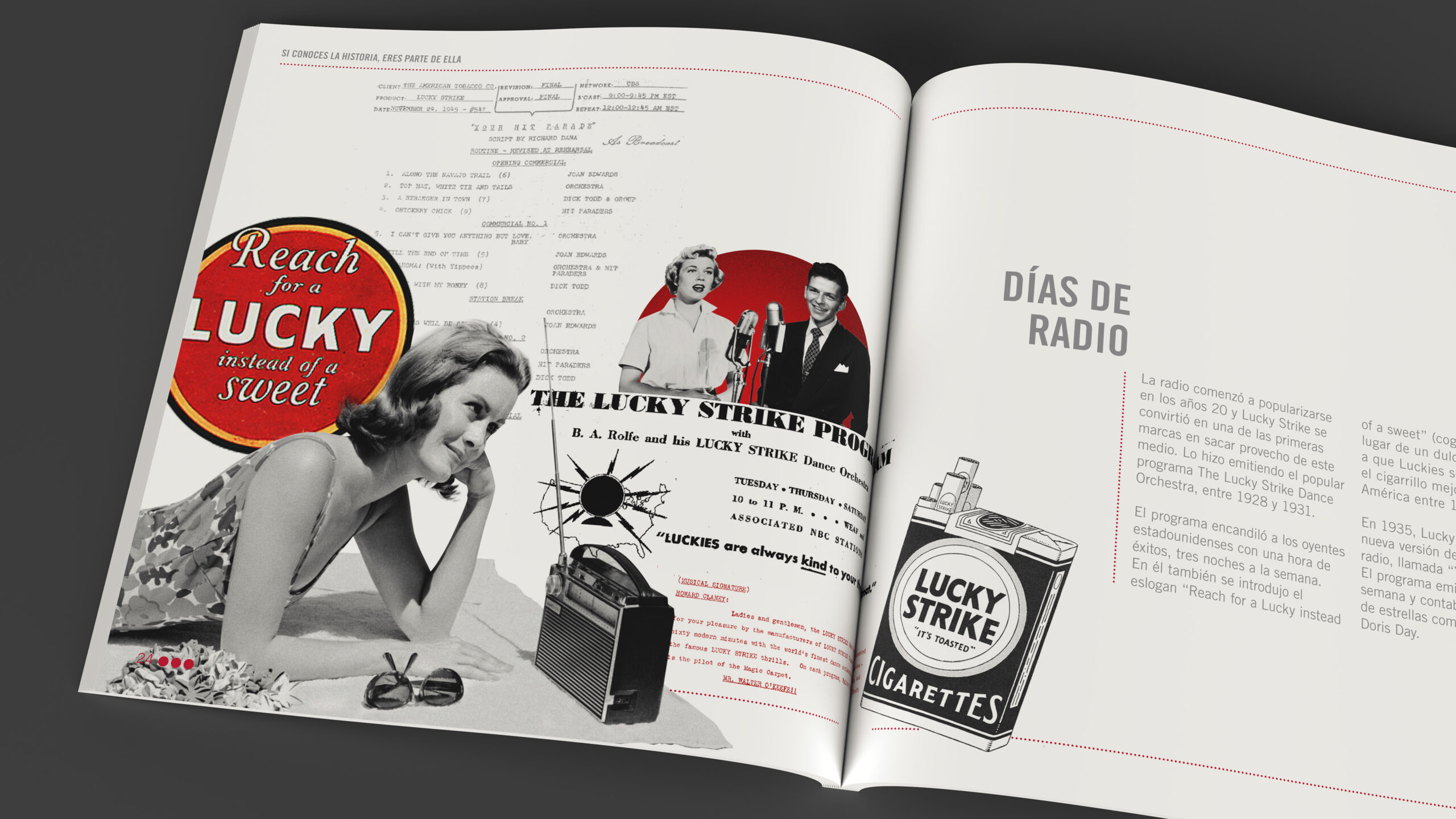
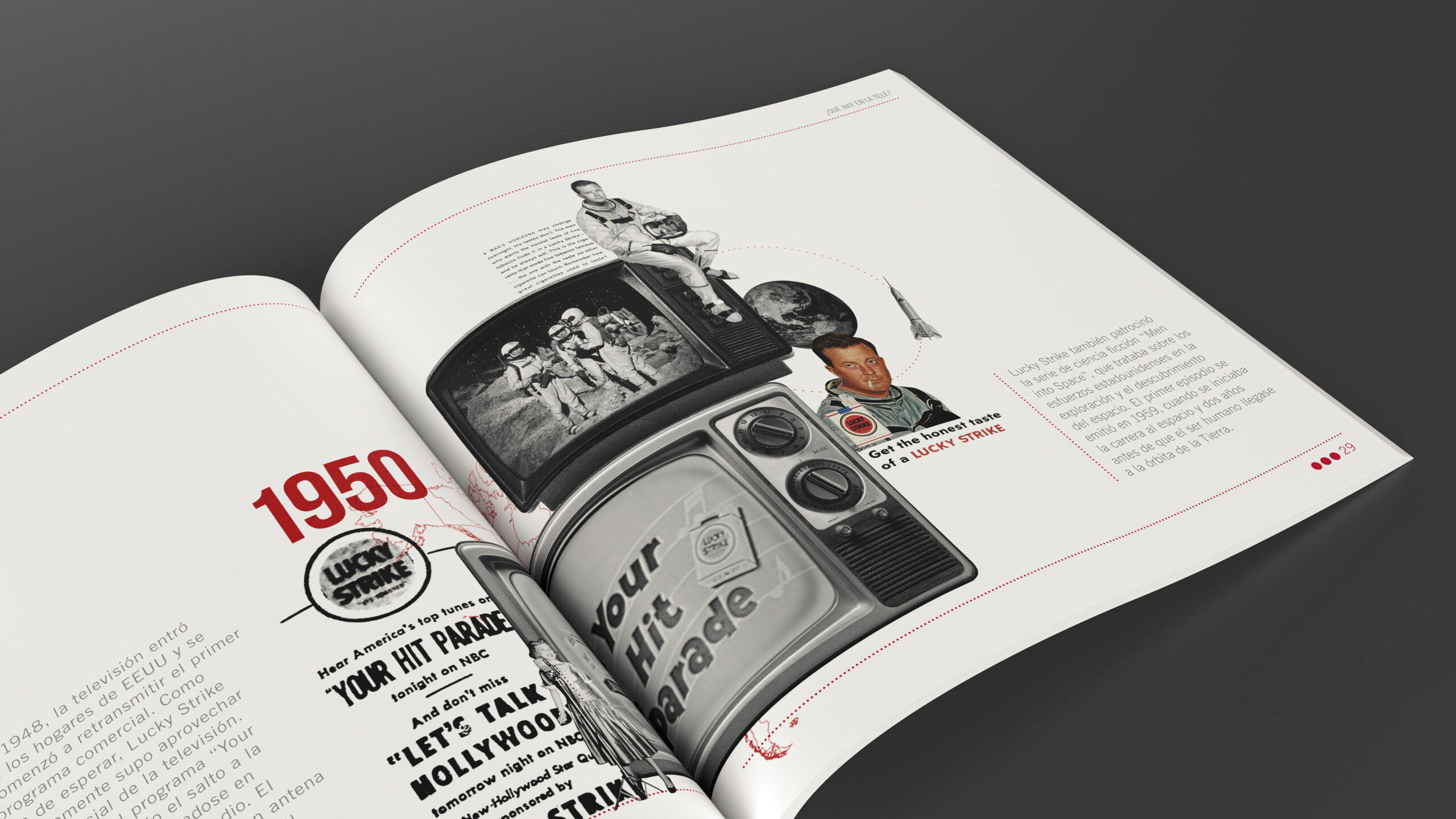
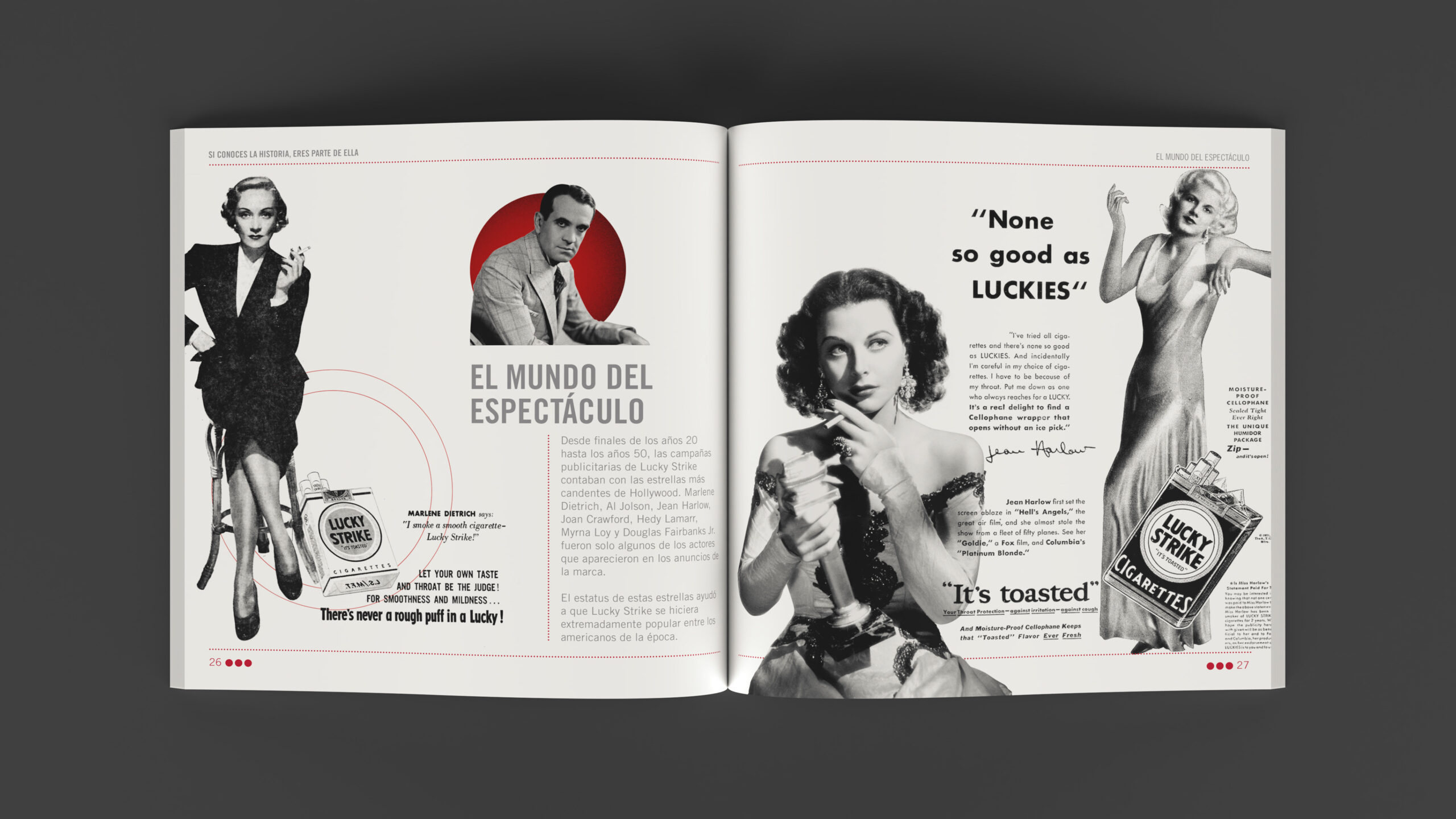
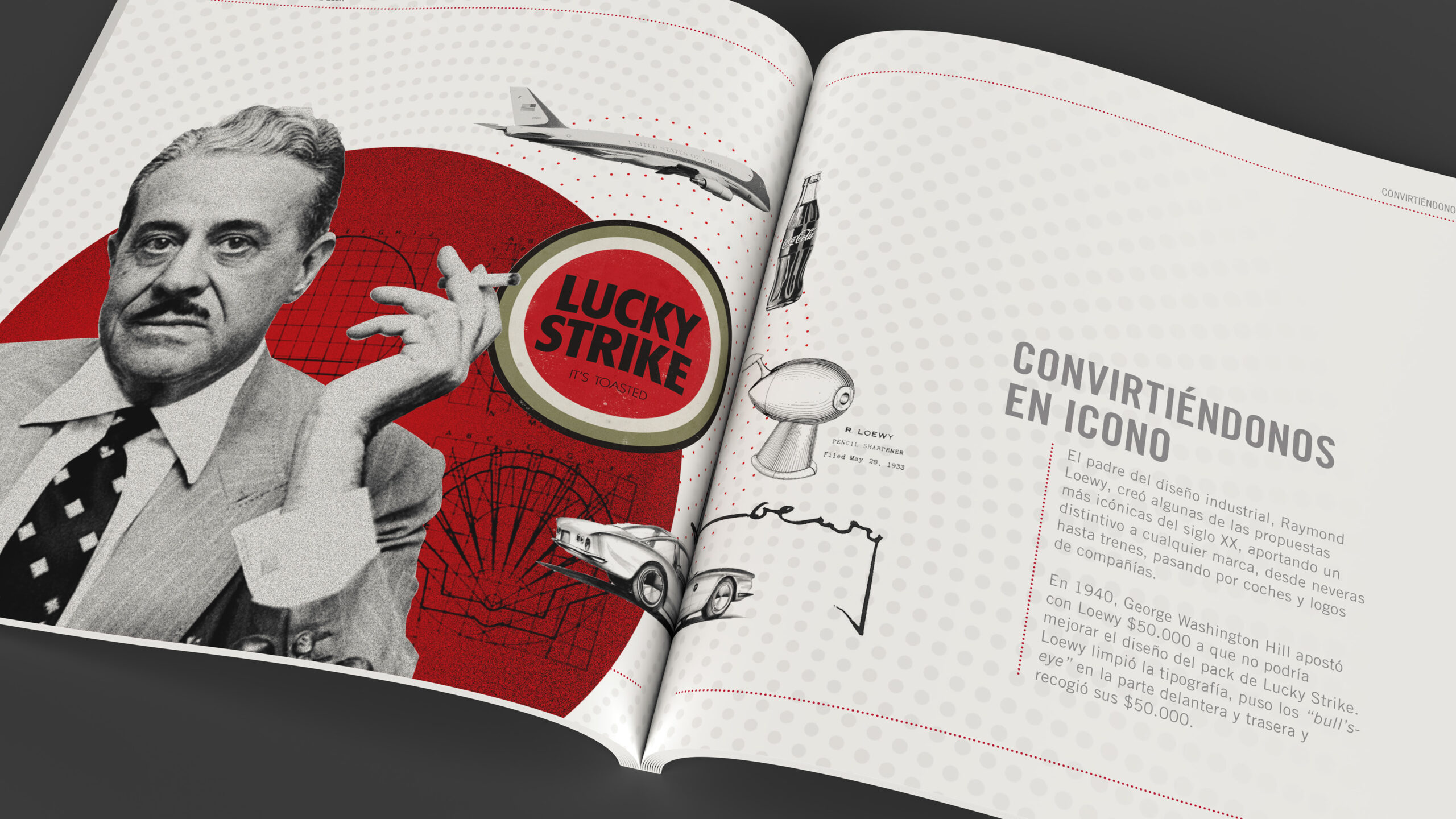
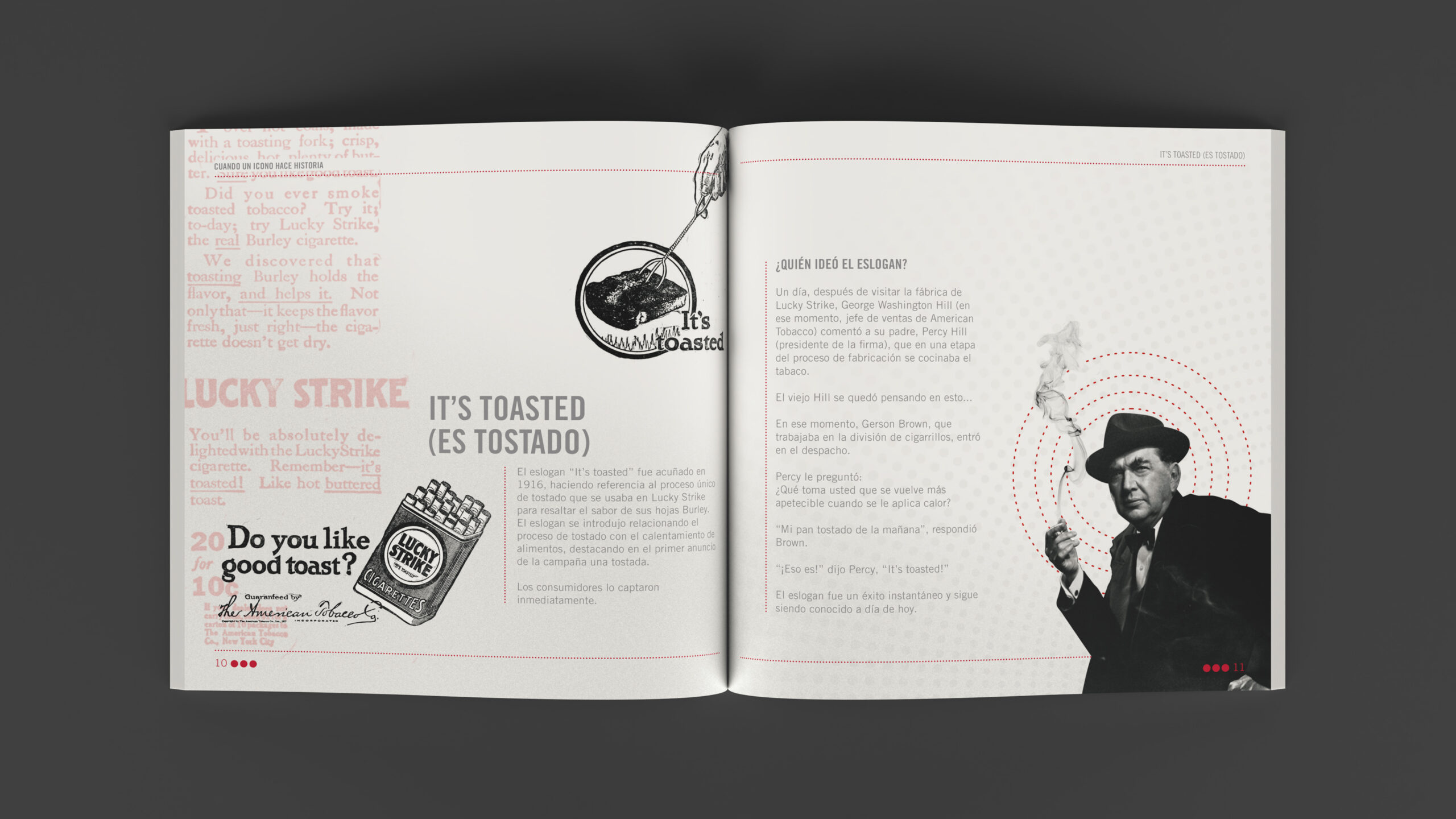
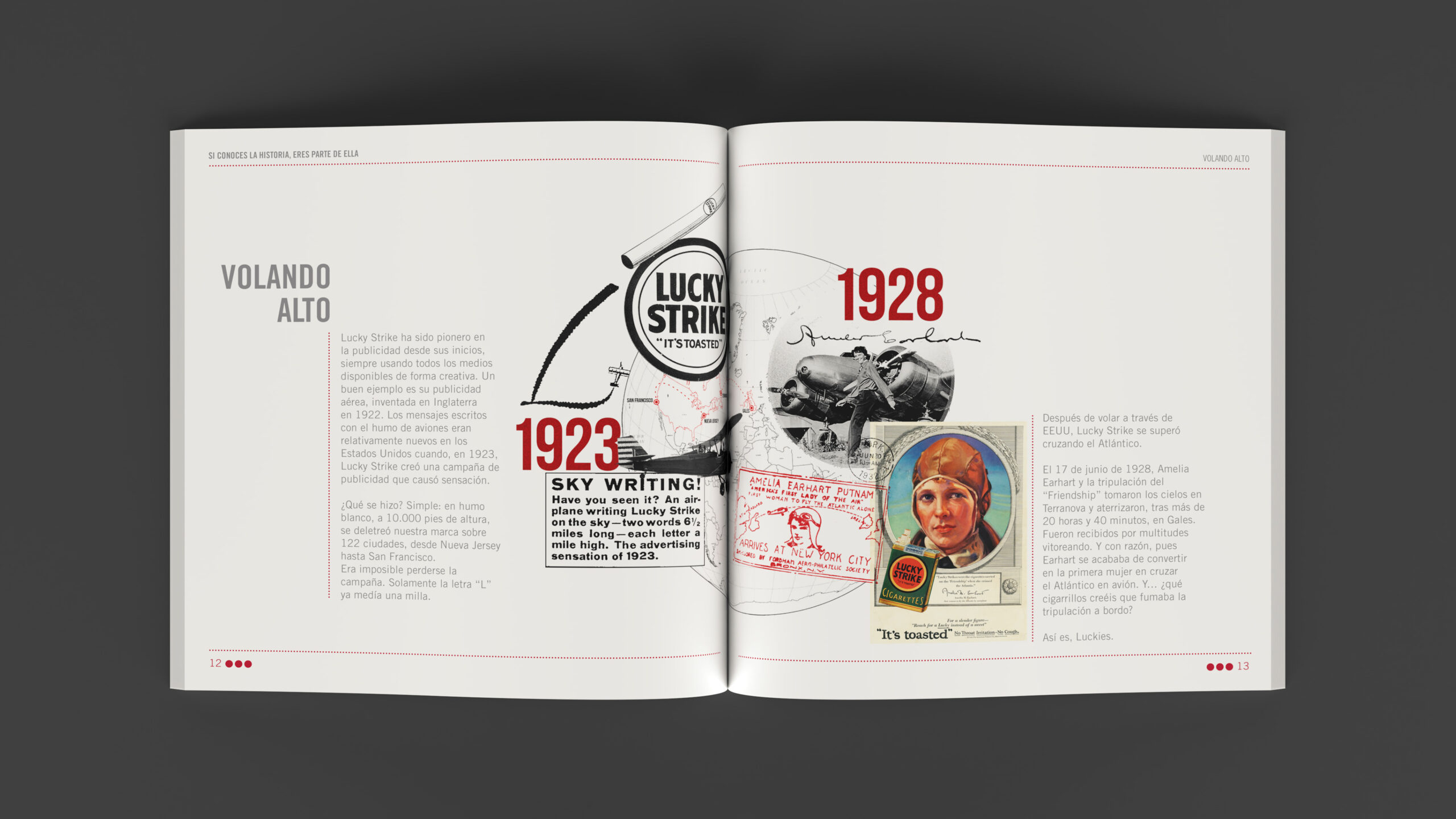
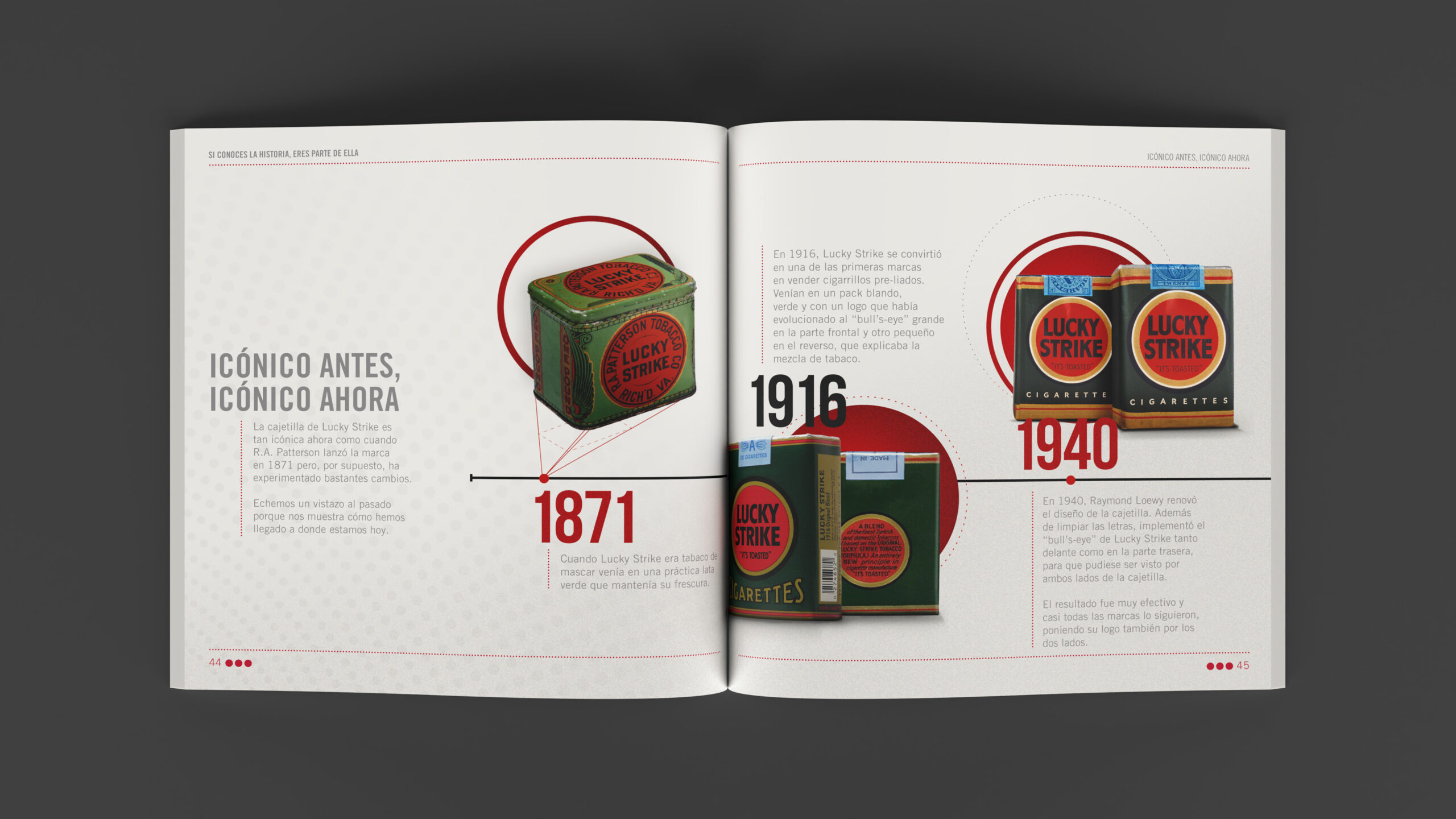
I defined the book as a visual archive divided into thematic chapters. Each chapter focuses on a key moment in the brand’s evolution: early advertising, radio and print campaigns, Hollywood influence, the idea of modernity, and the graphic evolution of the pack.

The intention was to show how communication, design decisions and cultural context shaped the brand identity over time.

The book was designed as a visual archive that connects past decisions with present identity.

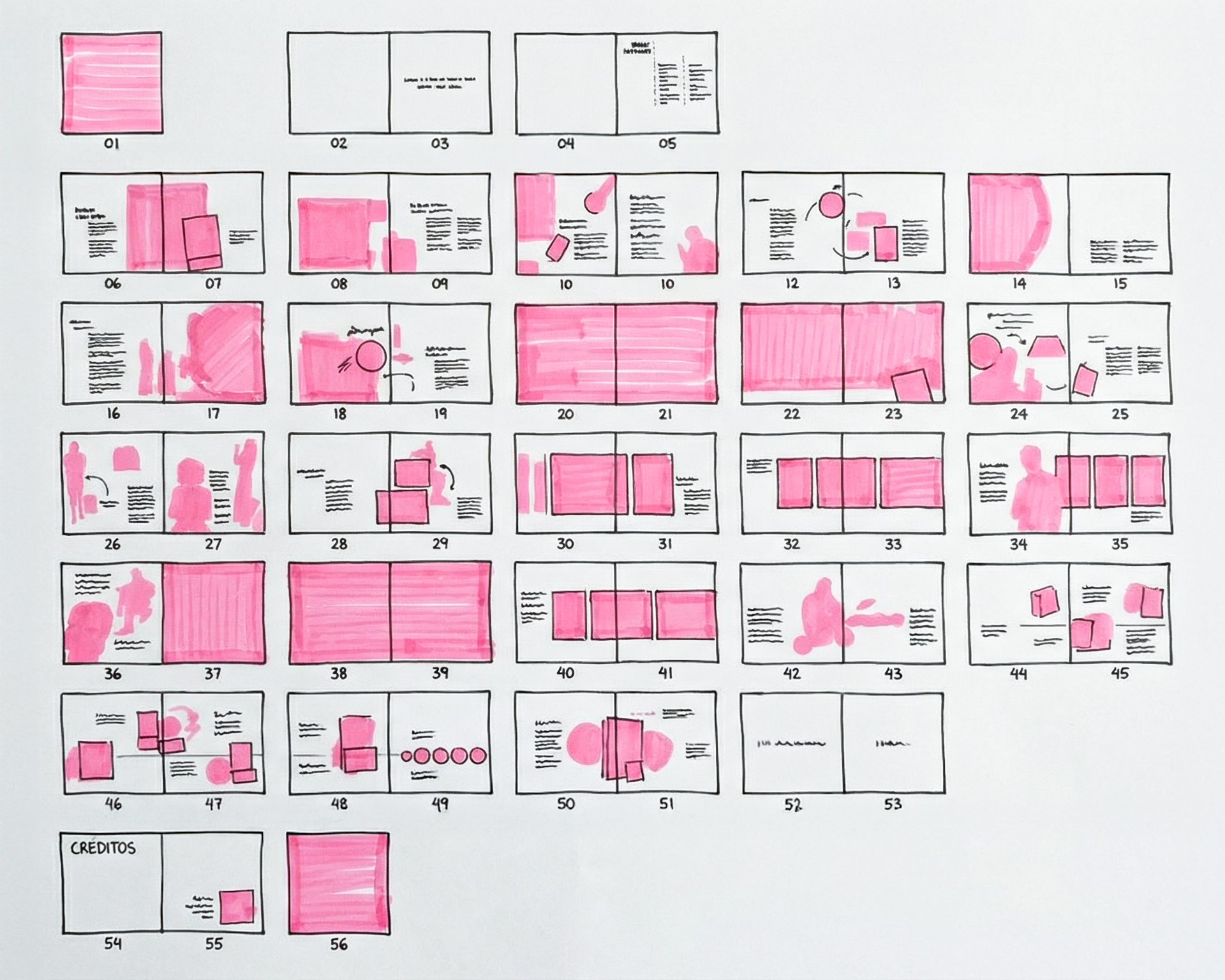
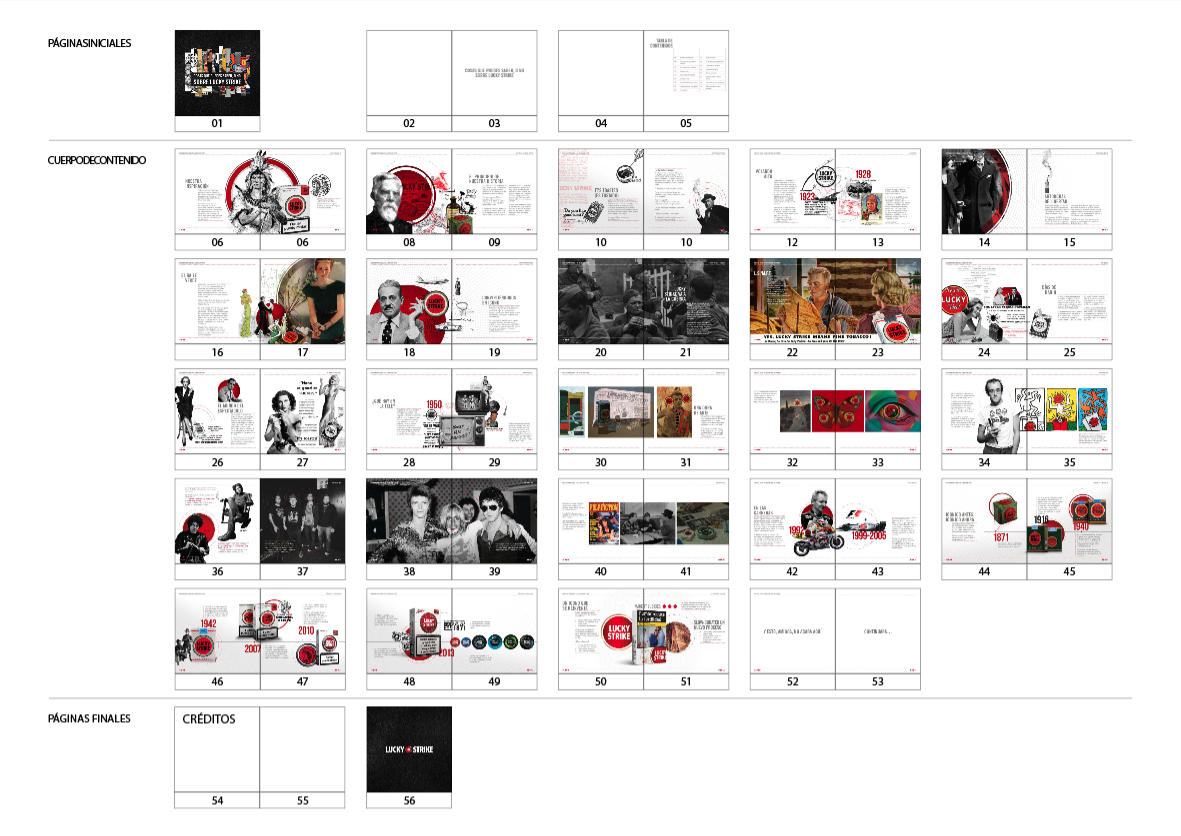
Before designing the final pages, I worked on a rough pagination plan. This helped me define rhythm, image density and text balance. I needed to see how chapters were breathing and where visual pauses were necessary.

The sketch plan allowed me to test how historical material, anecdotes and visual references would coexist. It also helped me avoid long text blocks and maintain clarity.

After that phase, I developed the final layout structure.

Seeing the full pagination together allowed me to control pacing and ensure that the book felt cohesive from beginning to end.

To keep consistency across the book, I designed a grid system based on the double page. Each spread was planned as one single composition. This was important because many visual elements cross from one page to the other.

Each page is built with a 12-column structure. When the two pages come together, the spread works with 24 columns in total. The grid also includes horizontal guides to control margins, text blocks and image placement.

The grid helped create visual order, especially because the project mixes different types of material: vintage ads, pack evolution, typography references and collage elements.
I used collage, subtle illustration and typography inspired by vintage advertising to connect different eras.

The idea was not to replace the past, but to create a dialogue between historical material and the updated identity system.

Color, scale and composition were used to guide attention. Some spreads are image-driven, while others give more space to narrative context. 

This book is a design exercise about memory and identity.

It shows how visual consistency and cultural relevance can transform a product into a long-term symbol.

Through this editorial piece, the brand’s evolution becomes understandable, structured and visually coherent, supporting an internal transition with clarity and intention.