100 Years Reading Together
Illustrating a century of literature
through the books that shaped each decade
ART DIRECTION - ILLUSTRATION - DIGITAL CAMPAIGN
Client
Casa del Libro
Creative Director
Juan Zilli
Creative Supervisor
Natalia Arias
Copywriter
Ana Benitez
Art Director
Laura Forero
Digital Director
Julio Fernández-Sanguino
Account Executive
María García Lydick
Tools
Adobe Photoshop
Procrate
Adobe Illustrator
In 2023, Casa del Libro celebrated its 100th anniversary. Founded in 1923, the bookstore became one of the most important literary references in Spain, with its historic store located in Gran Vía, Madrid.
To celebrate this milestone, our team developed a visual campaign that looked back at one hundred years of literature through the books that shaped each decade. Instead of creating a single commemorative graphic, I designed a series of illustrated pieces released throughout the year. Each visual represented a key literary work from a specific decade and translated the themes of the book into a visual language inspired by the graphic style of that period.
This approach allowed the campaign to connect literature, design, and cultural memory, creating a journey through time that readers could discover month by month.
The campaign was built around a simple question:
How can we visually represent the emotional and cultural impact of books across an entire century?
Instead of illustrating the stories in a literal way, the goal was to translate the main themes of each book into visual metaphors. Each decade was approached as its own visual universe, where the illustrations not only reflected the narrative of the selected book, but also referenced the artistic movements and graphic styles of the time in which it was written.
By combining literary insights with historical design references, the campaign created a visual timeline where literature and graphic culture evolved together.
1923 | El Tema de Nuestro Tiempo | Ortega y Gasset
Individuality in the age of mass society
Published in 1923, El tema de nuestro tiempo by José Ortega y Gasset reflects on the transformation of modern society during the early twentieth century. The book explores how industrialization, technological progress, and the rise of mass culture began to reshape individual identity and collective behavior.
Through the analysis of the text, four central ideas emerged:
INDIVIDUALISM | INDUSTRALIZATION | DEHUMANIZATION | INFOXICATION
These concepts became the foundation for the visual development of the illustration, where each scene represents one of these themes within a single composition.
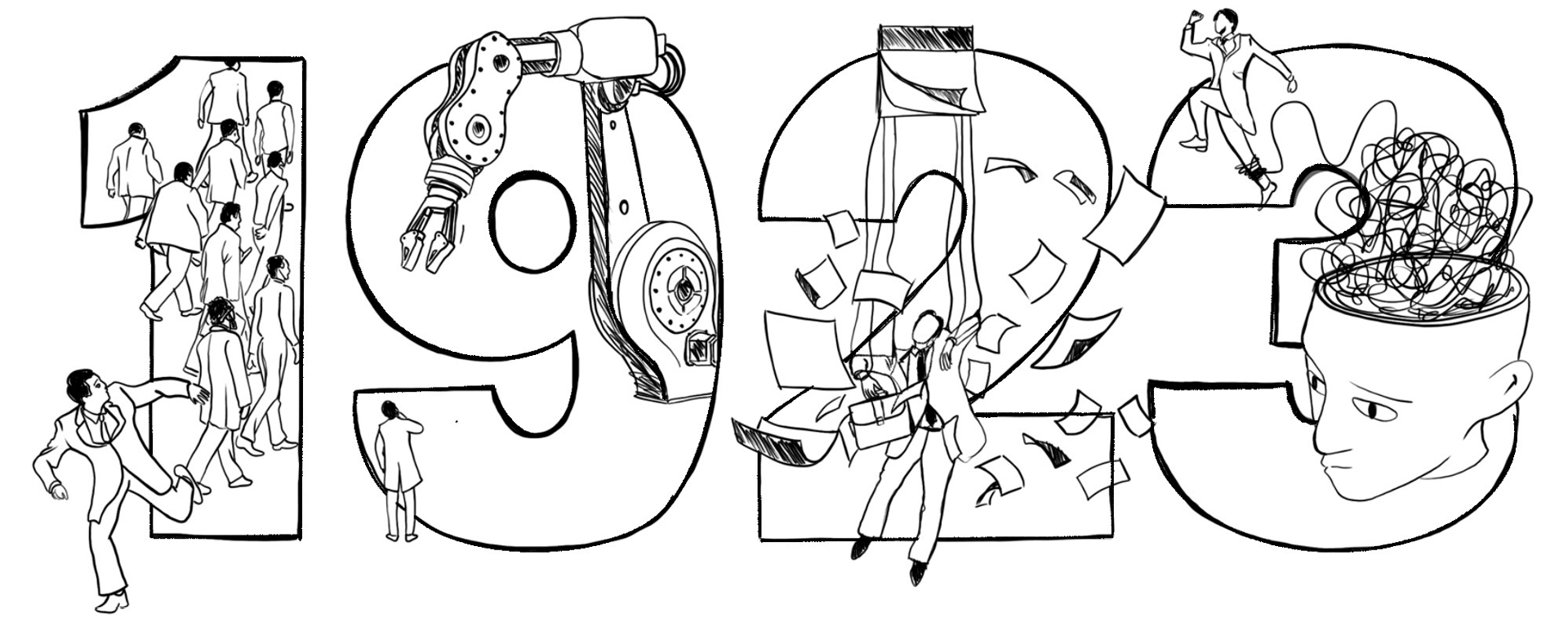
The illustration was structured as a single composition divided into four narrative scenes.
INDIVIDUALISM
Ortega y Gasset describes how modern society encourages people to follow collective trends instead of developing their own ideas and identity. The concept of individualism appears as a form of resistance against conformity and social pressure. In the illustration, this idea is represented through a figure that visually breaks away from a uniform crowd.
INDUSTRIALIZATION
Industrialization is presented in the book as both progress and threat. While it drives economic development and productivity, it also introduces standardized systems that reduce diversity and individuality. The visual scene represents this tension through mechanical environments and repetitive structures that surround the characters.
DEHUMANIZATION
One of the strongest critiques in the book focuses on how industrial systems transform people into anonymous parts of a production machine. Work becomes repetitive and detached from human meaning. In the illustration, this idea is expressed through characters integrated into mechanical environments that suggest loss of identity.
INFOXICATION
The book also anticipates a phenomenon that feels extremely contemporary: the overwhelming presence of information. When information becomes excessive, it loses clarity and meaning. The visual interpretation of this concept introduces elements that represent accumulation and saturation, reflecting how knowledge can become noise.
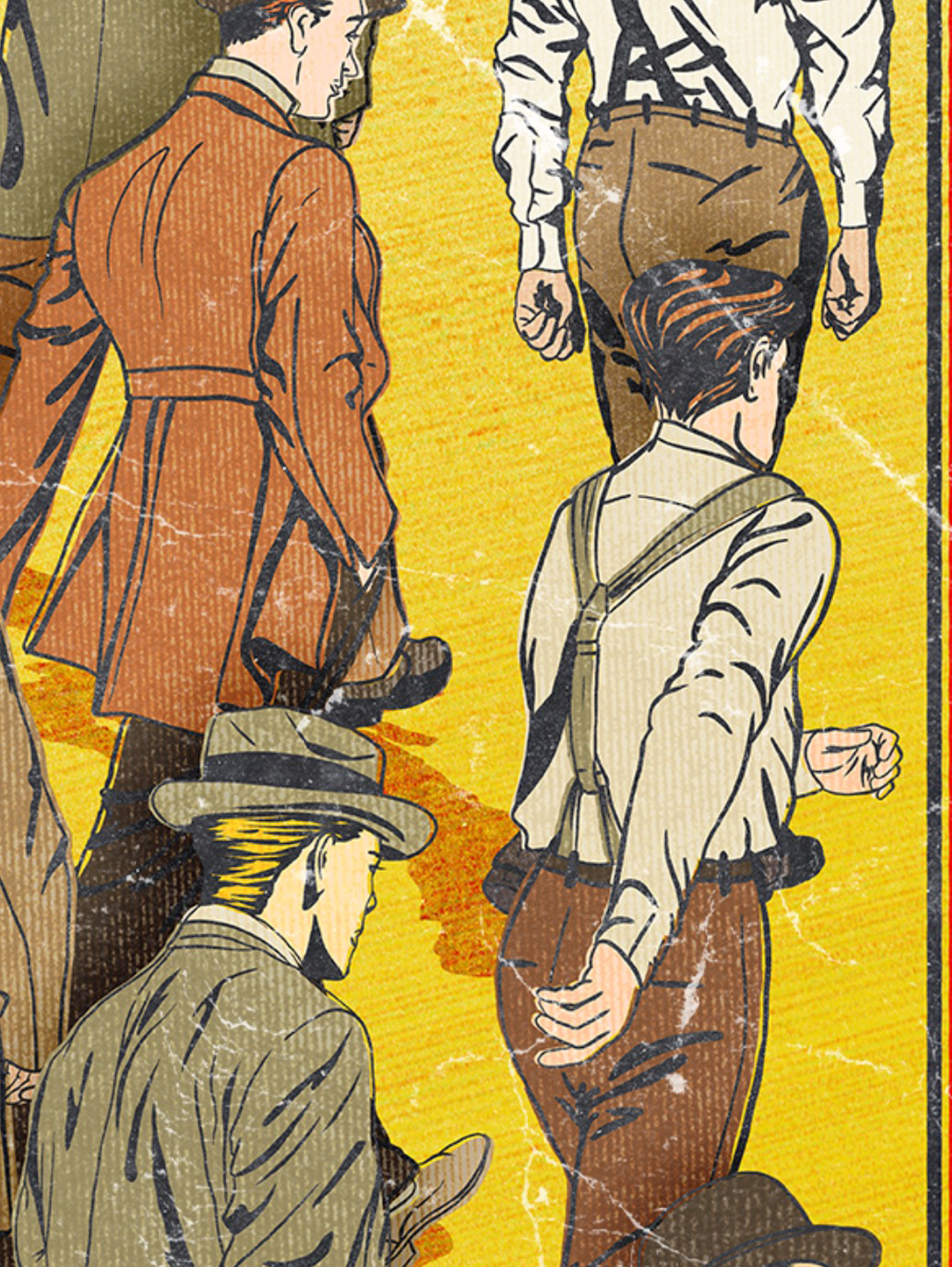
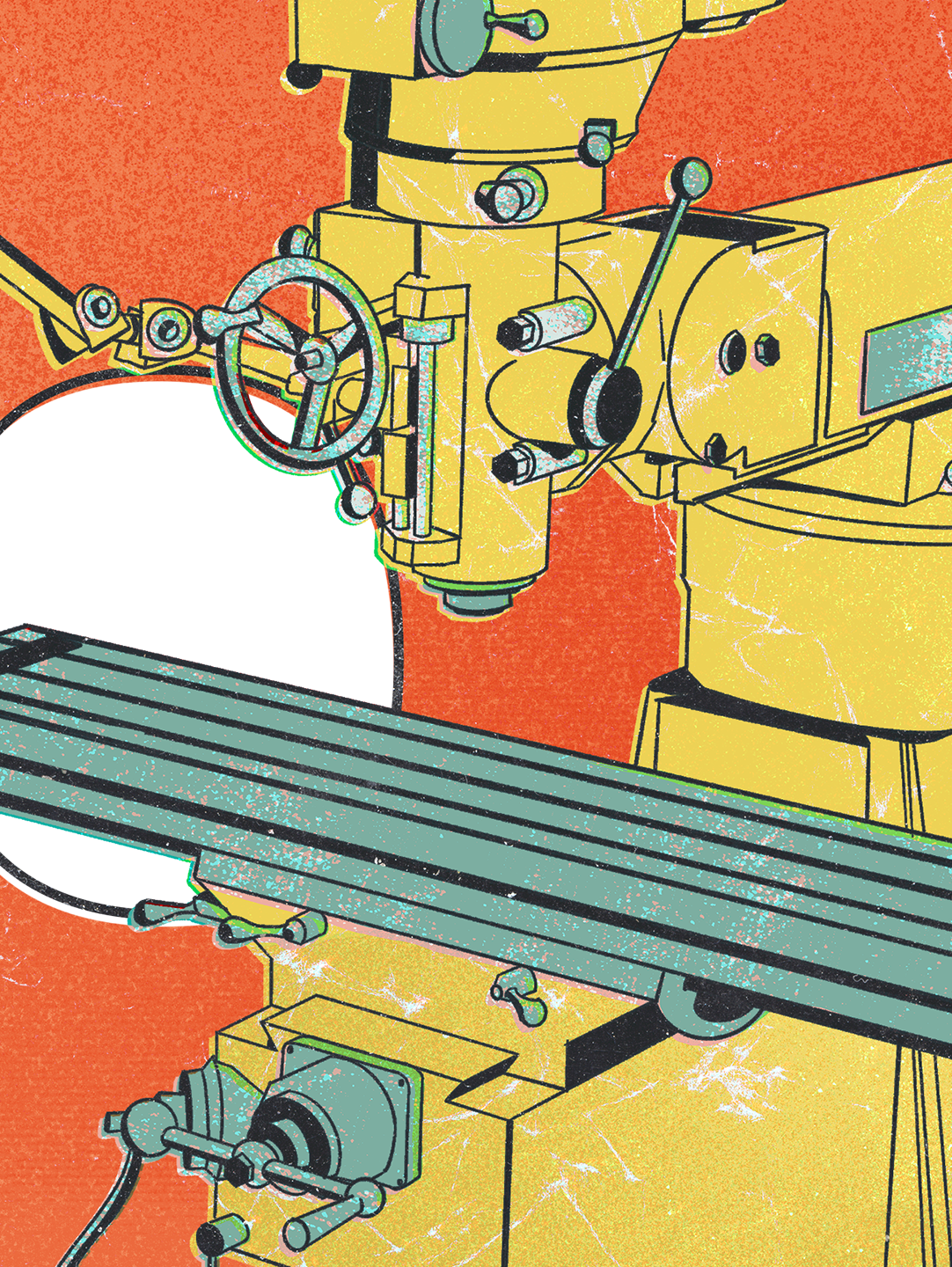

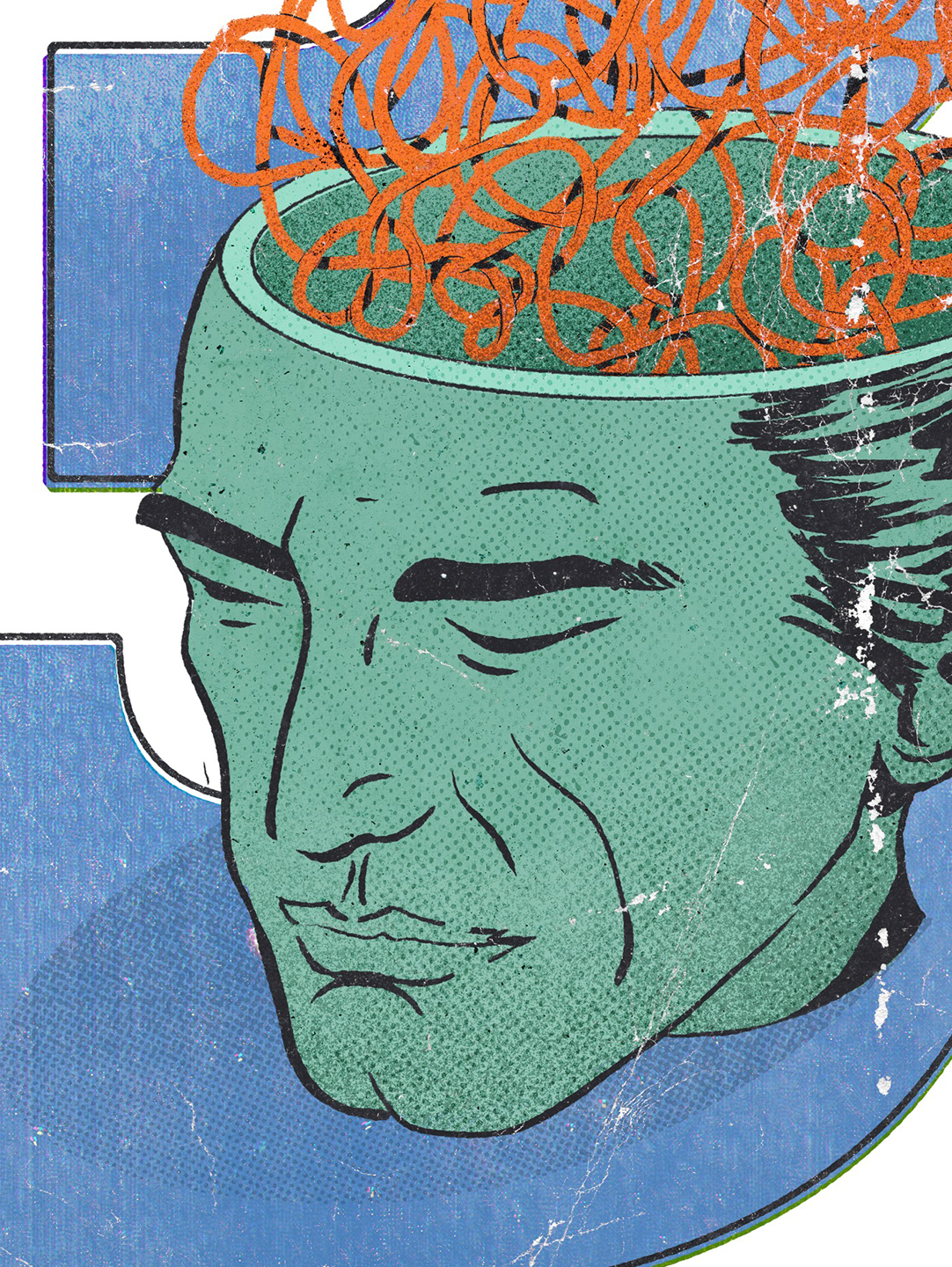
The final illustration was adapted into the graphic language of the campaign and translated into motion piece for digital platforms. This animated visual was used in paid social media placements, especially on Instagram, helping the campaign reach a wider audience throughout the anniversary year.
Here you can discover which books defined the 1920s.
1935 | Romancero Gitano | Federico García Lorca
Symbolism and the emotional world of Lorca
Published in 1935, Romancero Gitano by Federico García Lorca is a collection of poems that explores themes such as night, destiny, love, death, and the symbolic universe of Andalusian gypsy culture. Through these poems, Lorca creates a poetic world where everyday life mixes with myth, imagination, and tragedy.
For the illustration, four poems were selected from the collection:
ROMANCE OF THE MOON, MOON | THE GYPSY NUN
ROMANCE OF THE BLACK SORROW | DEAD FROM LOVE
Each poem introduces a different emotional atmosphere and narrative situation.
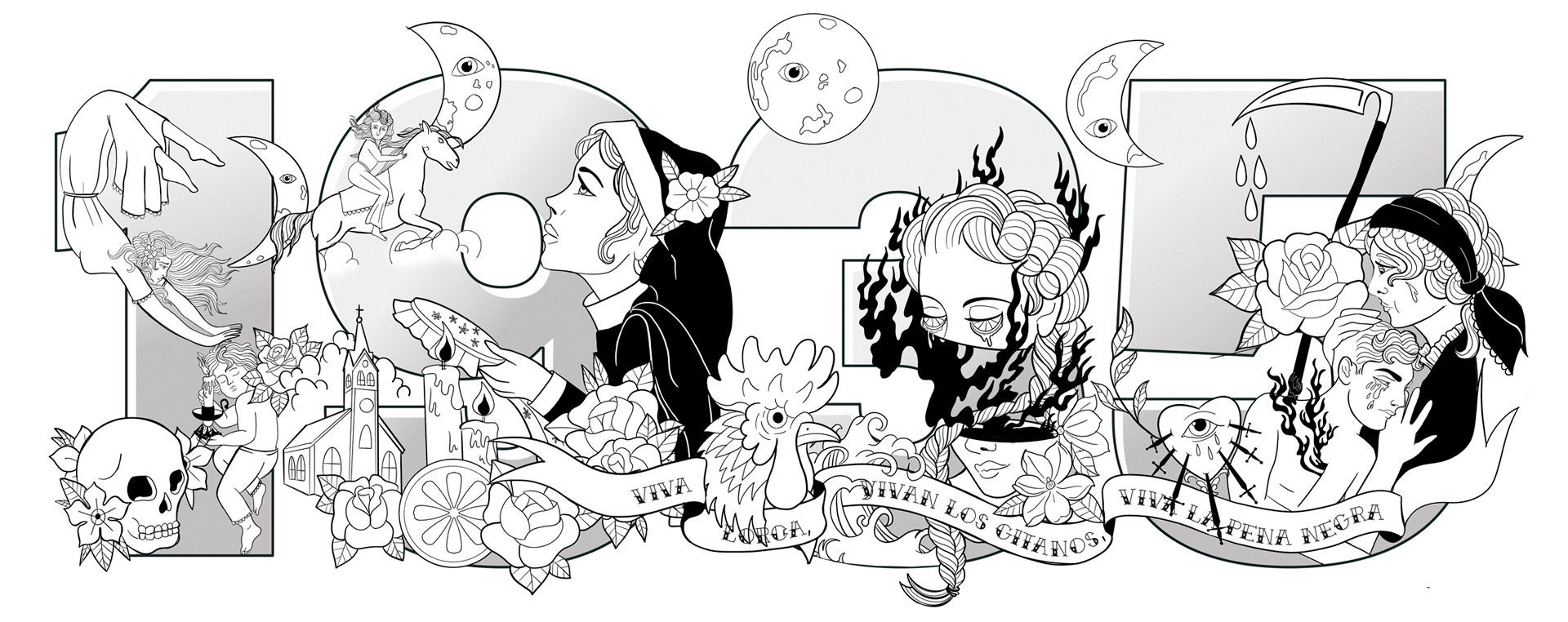
These four stories became the foundation for the composition, where every scene represents one of the poems.
ROMANCE OF THE MOON, MOON
This poem describes a mysterious encounter between a child and the moon inside a forge. The moon appears almost like a living being, dancing and speaking while the child watches with fascination. The moment is filled with tension, because the child warns the moon that the gypsies will arrive soon. When they finally come, the child has already died, and the moon carries him across the sky.
THE GYPSY NUN
This poem tells the story of a nun who embroiders flowers on fabric while her imagination travels far beyond the walls of the convent. As she works, she imagines scenes that contrast with her quiet environment, including the image of two riders crossing the landscape.
ROMANCE OF THE BLACK SORROW
In this poem, Lorca presents the character of Soledad Montoya, a gypsy woman walking alone at dawn. Her sadness is deep and difficult to explain, and the poem becomes a reflection on loneliness and emotional suffering.
DEAD FROM LOVE
This poem unfolds as a dialogue between a mother and her son, who senses that his death is near. The scene takes place during the night, in a quiet and almost dreamlike environment. The young man imagines the moment of his death while musicians and mourners appear in his vision. The illustration captures this mixture of imagination and fate, representing the fragile line between life, memory, and the acceptance of destiny.
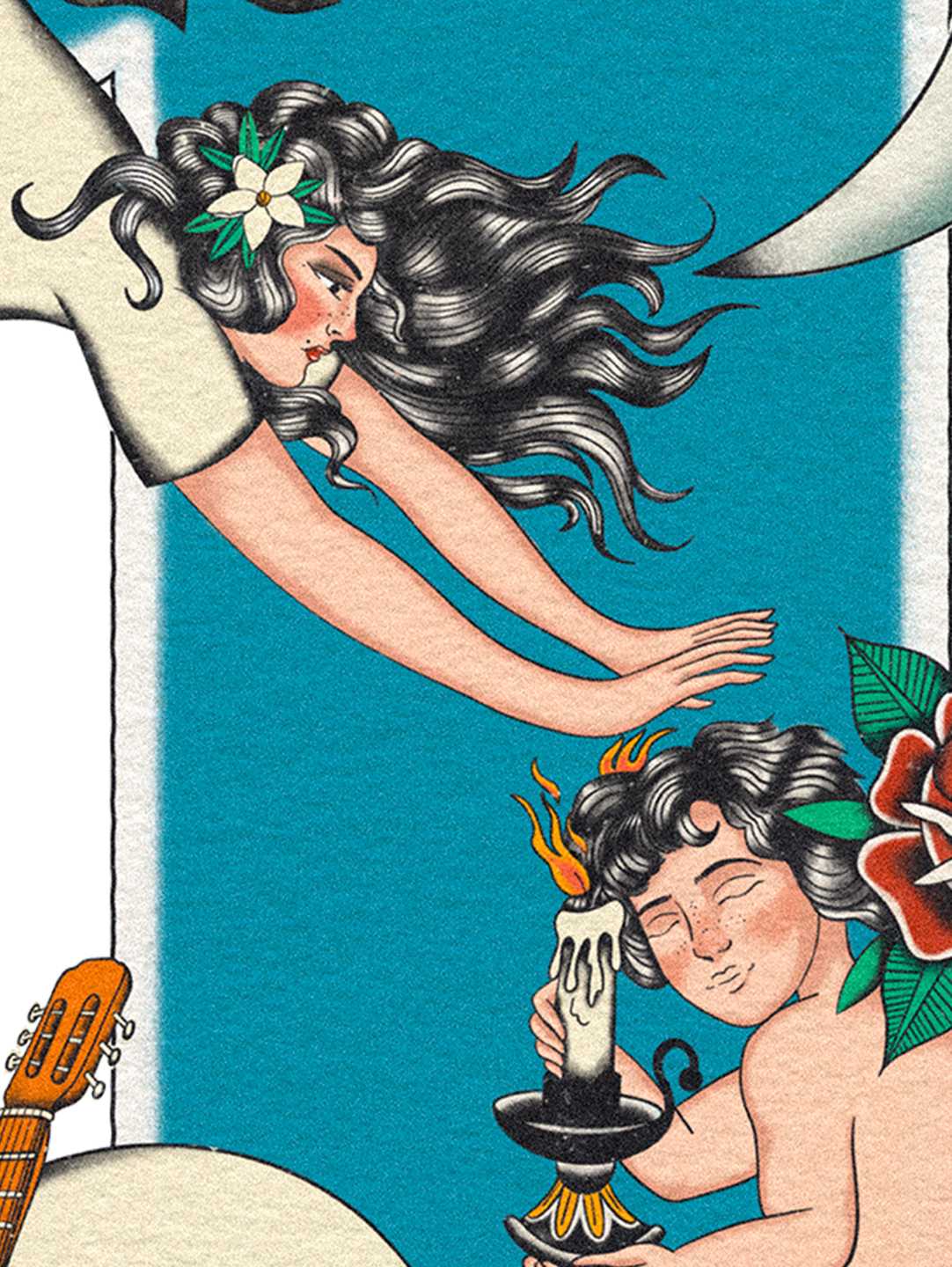

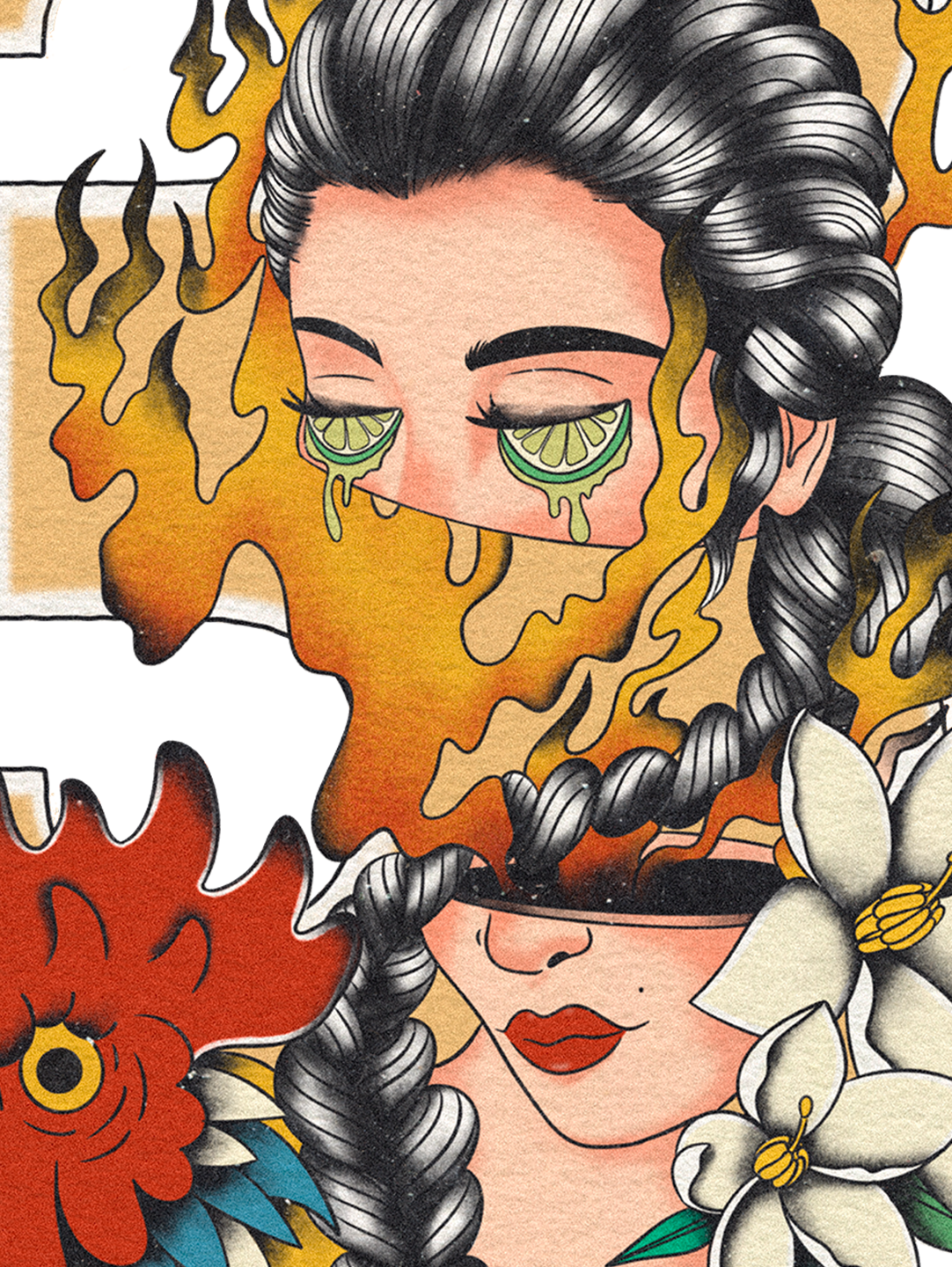

The illustration was later adapted into the visual format of the campaign and translated into motion graphics for digital platforms. The animated version was used in paid social media placements, especially on Instagram, helping bring Lorca’s poetic universe into the digital environment of the campaign.
Here you can discover which books defined the 1930s.
1945 | Nada | Carmen Laforet
Growing up in the shadow of postwar Spain
Published in 1945, Nada by Carmen Laforet tells the story of Andrea, an eighteen-year-old girl who moves to Barcelona to study at the university after the Spanish Civil War. She arrives with hopes of independence and a new life, but soon finds herself living in a tense and chaotic household that reflects the emotional and social wounds of the postwar period.
Through Andrea’s experience, the novel explores themes such as personal identity, family conflict, loneliness, and the search for freedom. From the analysis of the story, four key moments were selected to structure the illustration:
NIGHTMARE AND OPPRESSION | FREEDOM AND INDIFFERENCE
SECRETS AND PERPLEXITY | DESPAIR AND HOPE
Each scene represents a different stage in Andrea’s emotional journey.
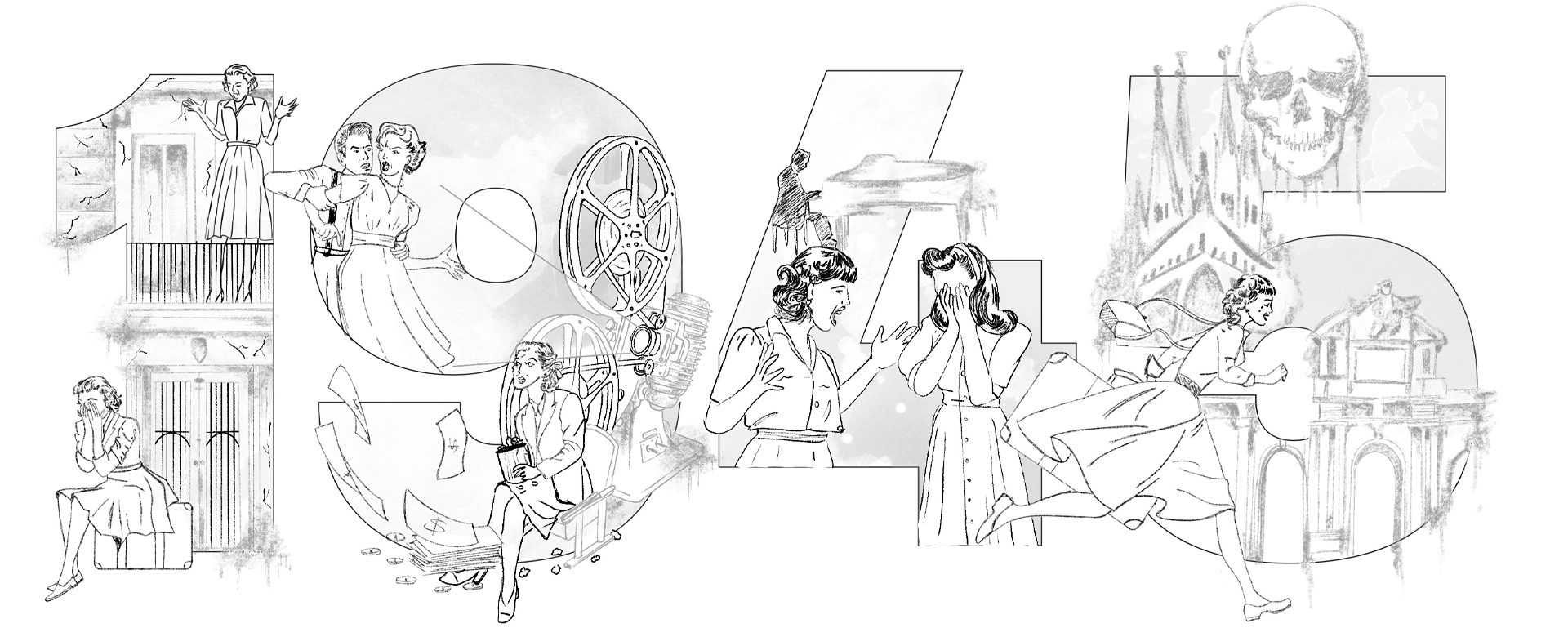
The illustration is structured around these four key moments.
NIGHTMARE AND OPPRESSION
The first scene shows Andrea arriving at the family apartment on Aribau Street in Barcelona. At the beginning, she expects to find stability and warmth, but the atmosphere of the house quickly reveals itself as dark and oppressive. The space appears almost abandoned, filled with tension and emotional instability. Andrea sits on her suitcase, overwhelmed by the environment, while her aunt Angustias shouts from a balcony above. This moment introduces the suffocating atmosphere that defines Andrea’s early days in the house.
FREEDOM AND INDIFFERENCE
In the second scene, Andrea is shown inside a movie theater. For the first time, she experiences a sense of freedom and independence. With the small pension she receives as an orphan, she begins to make her own decisions and distances herself from the toxic dynamics of her family. The cinema also works as a metaphor. On the screen, the conflicts of her relatives appear almost like a film that she chooses not to watch too closely. Andrea becomes a spectator of the chaos around her, creating emotional distance in order to survive.
SECRETS AND PERPLEXITY
The third scene focuses on the complex relationship between Andrea and her friend Ena. When Ena suddenly becomes distant, Andrea struggles to understand the reason behind this change. In the background, Román plays the piano, representing the hidden tensions and secrets that affect the relationship between the two friends. As the story progresses, Andrea gradually discovers the truth behind Ena’s behavior, which allows their friendship to evolve into something stronger.
DESPAIR AND HOPE
The final scene represents Andrea leaving Barcelona for Madrid after months of emotional struggle. The decision marks the end of a difficult period in her life. The illustration includes symbolic elements such as a skull, referring to the death of Román but also suggesting the end of Andrea’s past. While the moment reflects exhaustion and despair, it also introduces the possibility of a new beginning. Andrea leaves behind the oppressive environment of the house and moves toward an uncertain but hopeful future.
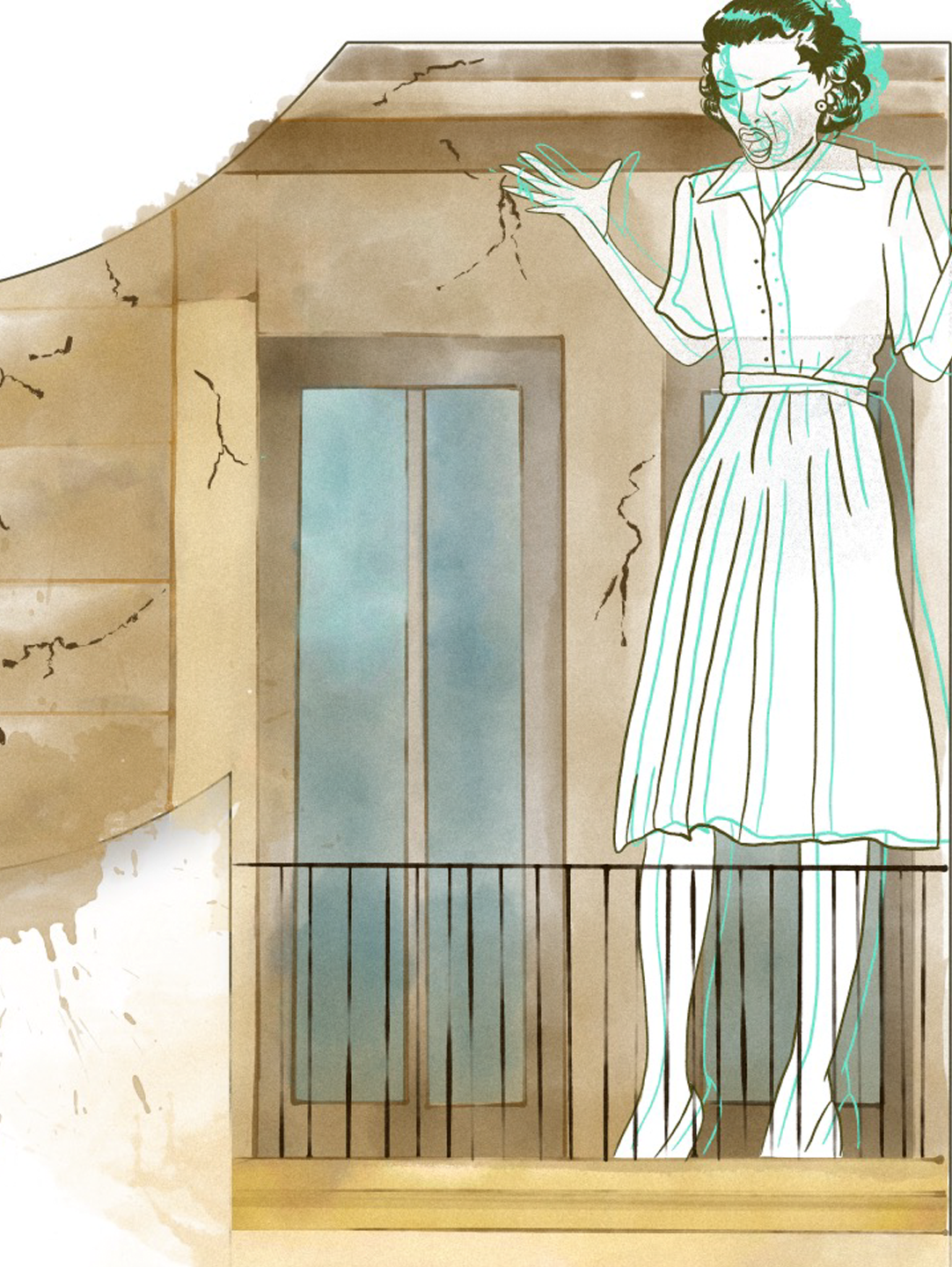

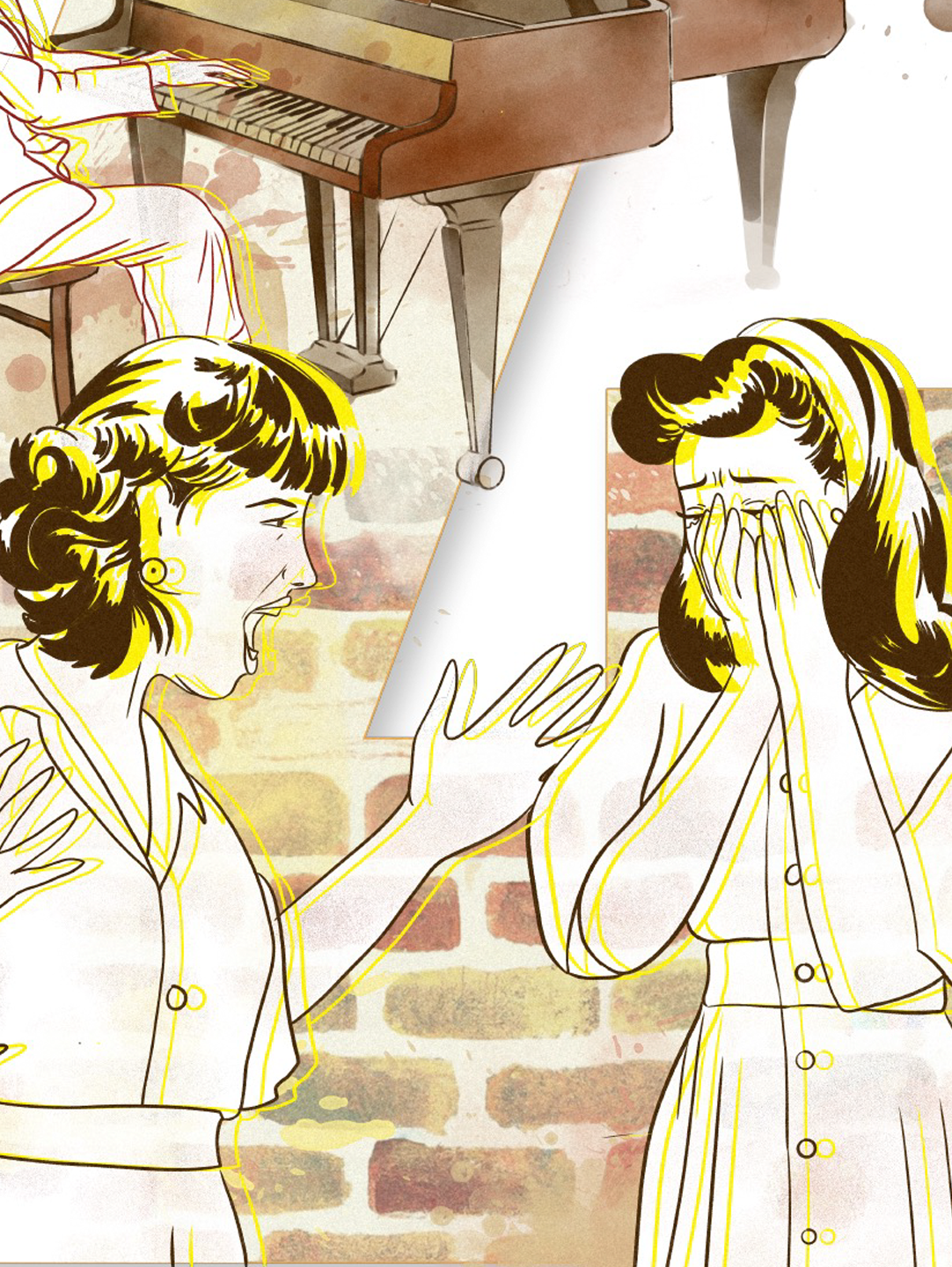
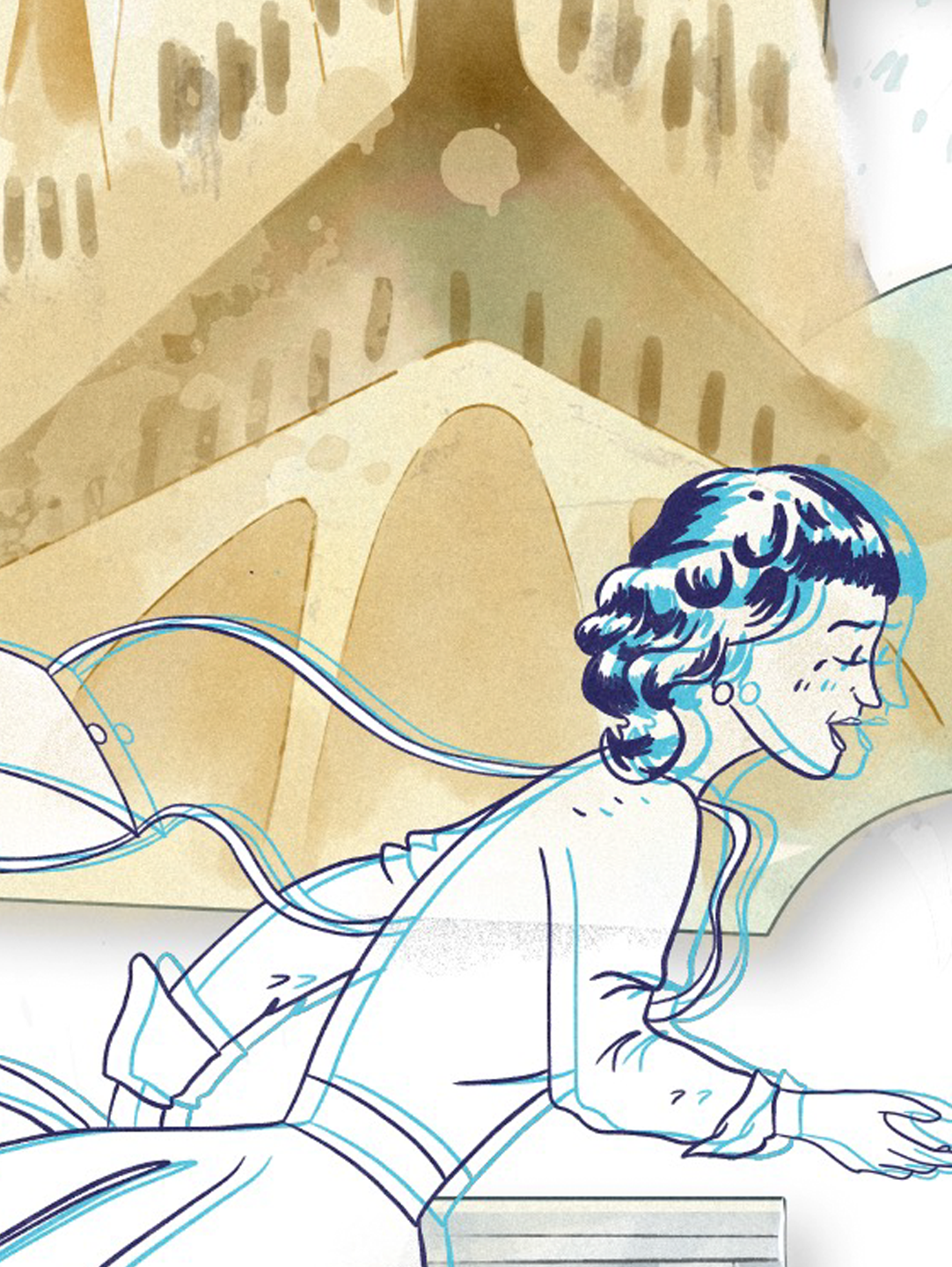
The illustration was later adapted into the visual system of the campaign and translated into motion graphics for digital platform. The animated version was used as paid content on Instagram, helping bring this literary moment into the broader digital communication of the centenary.
Here you can discover which books defined the 1940s.
1958 | Entre Visillos | Carmen Martín Gaite
Private lives under the gaze of society
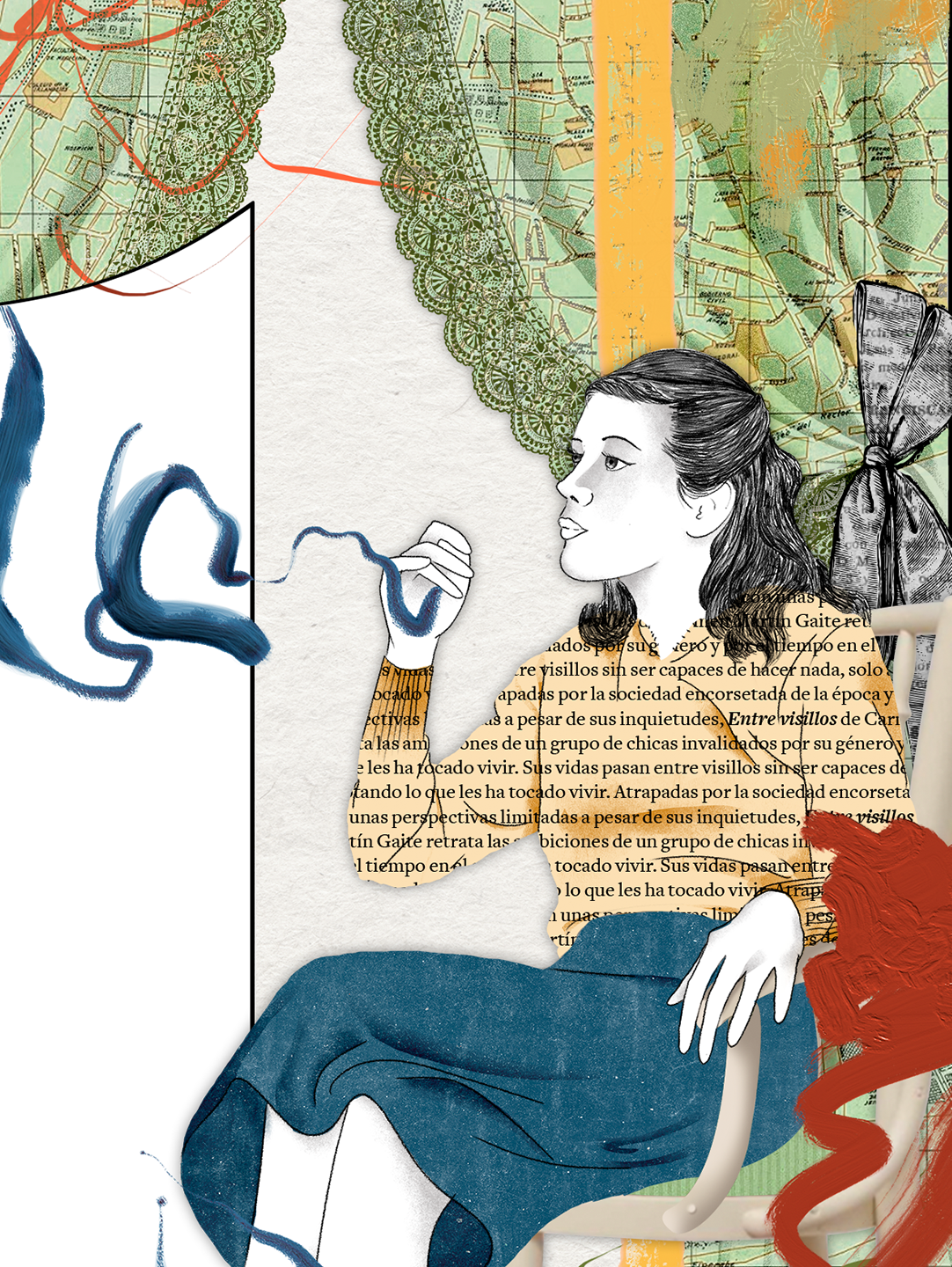
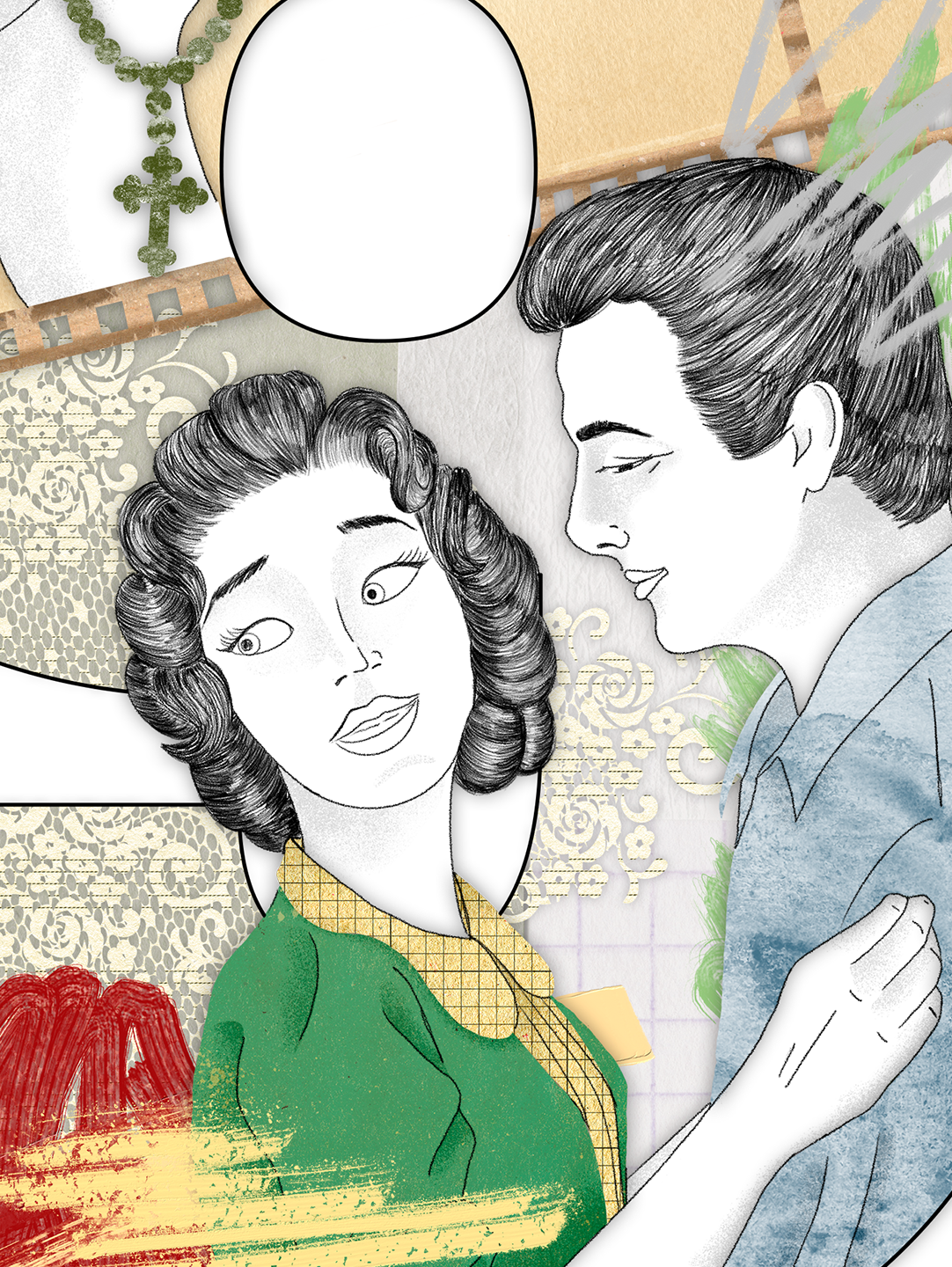
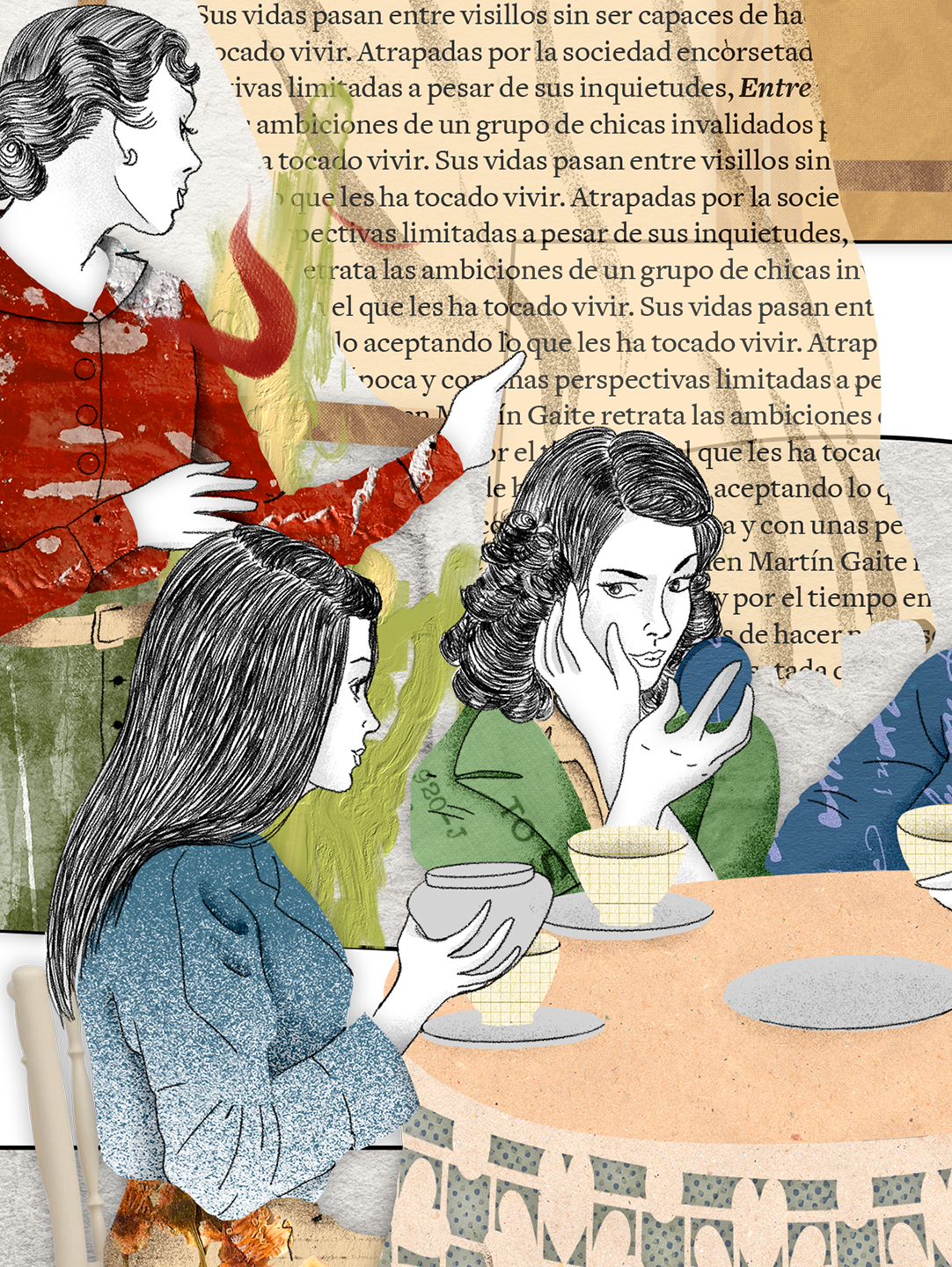
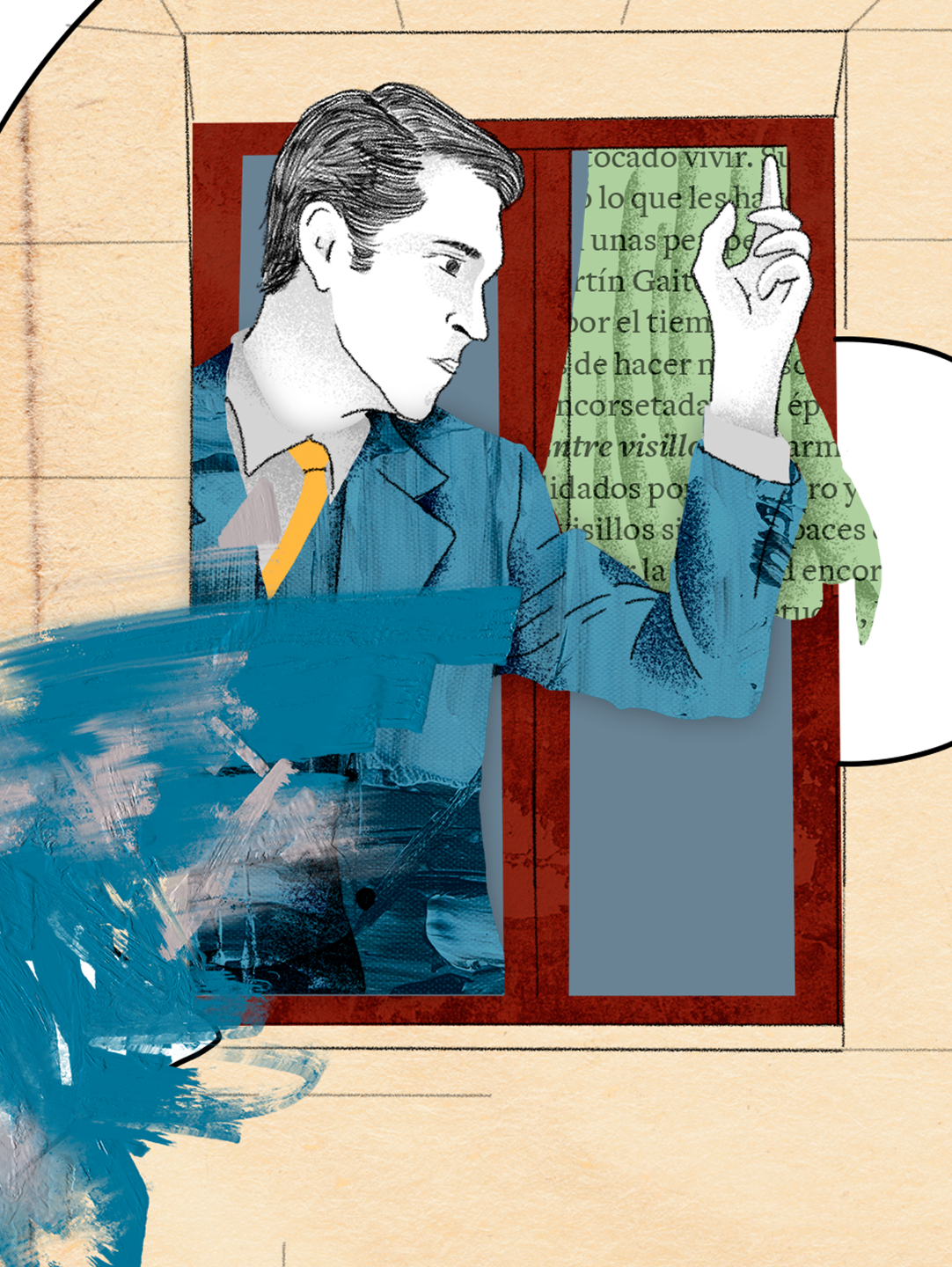
Published in 1958, Entrevisillos by Carmen Martín Gaite portrays everyday life in a provincial Spanish city during the postwar years. The novel follows a group of young women who are trying to find their place in a society shaped by strict social norms, family expectations, and limited opportunities.
Through the experiences of characters such as Elvira, Julia, Natalia, and Mercedes, the story reflects the tension between personal desires and the pressure to conform to traditional roles. From the analysis of the novel, four central ideas guided the visual development of the illustration:
FREEDOM | GUILT | APPEARANCE | INTRUSION
Each scene represents a different stage in Andrea’s emotional journey.
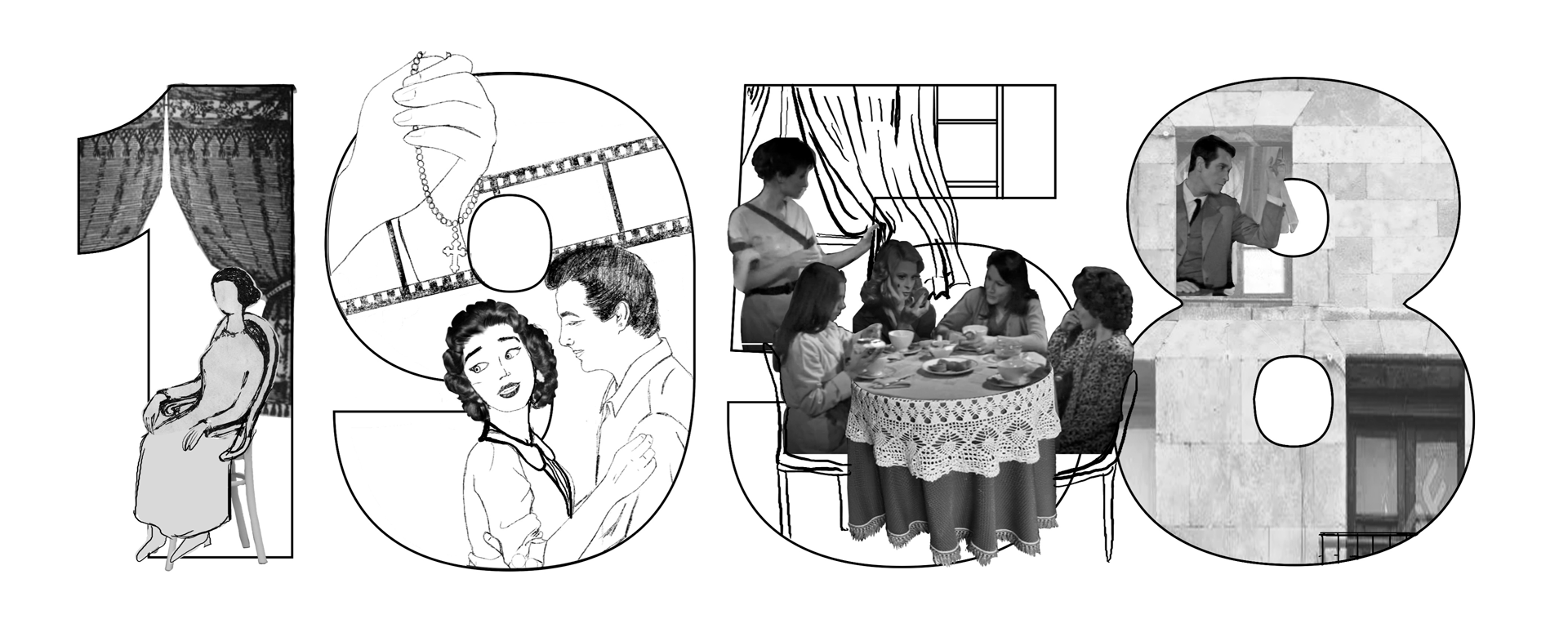
Together, these moments reveal the invisible rules that shape the characters’ lives.
FREEDOM
The first scene focuses on Elvira, seen through a set of curtains. She feels trapped between her family’s expectations and the rigid social rules that define her future. Marriage appears as the expected path, but she secretly dreams of a different life. The curtains become a visual metaphor for this situation. They represent both protection and confinement, suggesting how Elvira observes the outside world while feeling unable to fully step into it.
GUILT
The second scene introduces Julia, who struggles with feelings of guilt connected to her emotions and desires. Although she loves her boyfriend, she also feels the pressure of social norms that judge her thoughts and behavior. The scene takes place inside a cinema. The film reel helps situate the environment while also suggesting the idea of watching one’s own life unfold like a story. Julia is caught between what she feels and what society expects from her.
APPEARANCE
In the third scene, the focus shifts to the adult women of the community. Many of them dedicate their time to maintaining their public image and social status. Makeup, clothing, and conversation become tools to reinforce appearances. The illustration shows women preparing themselves and sharing gossip during a tea gathering. The scene highlights how social reputation and outward perfection play an important role in this environment.
INTRUSION
The final scene reflects the constant presence of gossip and surveillance within the town. Personal lives are rarely private, as neighbors observe and comment on the behavior of others. The character of Pablo Klein appears in this scene. Although he initially seems more independent than the others, he is gradually drawn into the same network of rumors and curiosity that surrounds the community. Curtains appear again in the composition, reinforcing the idea that everyone is watching and being watched.
The illustration was later adapted into the visual language of the campaign and translated into motion graphics for digital platforms. The animated version was used in paid Instagram placements, helping connect this literary moment with the broader digital communication of Casa del Libro’s centenary.
Here you can discover which books defined the 1940s.
1966 | Últimas Tardes con Teresa | Juan Marsé
Desire, class differences, and the illusion of belonging
Published in 1966, Últimas tardes con Teresa by Juan Marsé takes place in Barcelona during the 1960s, a city marked by strong contrasts between the wealthy bourgeoisie and the marginalized neighborhoods on its outskirts. The novel follows Manolo, known as Pijoaparte, a young man from a poor background who dreams of moving into a higher social world.
Through his relationship with Teresa, a university student from an upper-class family, the story explores themes such as ambition, identity, and social inequality. The novel combines romance with sharp social observation, revealing the tensions between appearance and reality within different social classes.
From the analysis of the story, four narrative moments guided the visual development of the illustration:
APPEARANCE | ACCIDENT AND ENCOUNTER
DEATH AND SEPARATION | DESTINY
Each of these moments guided the visual development of the illustration.
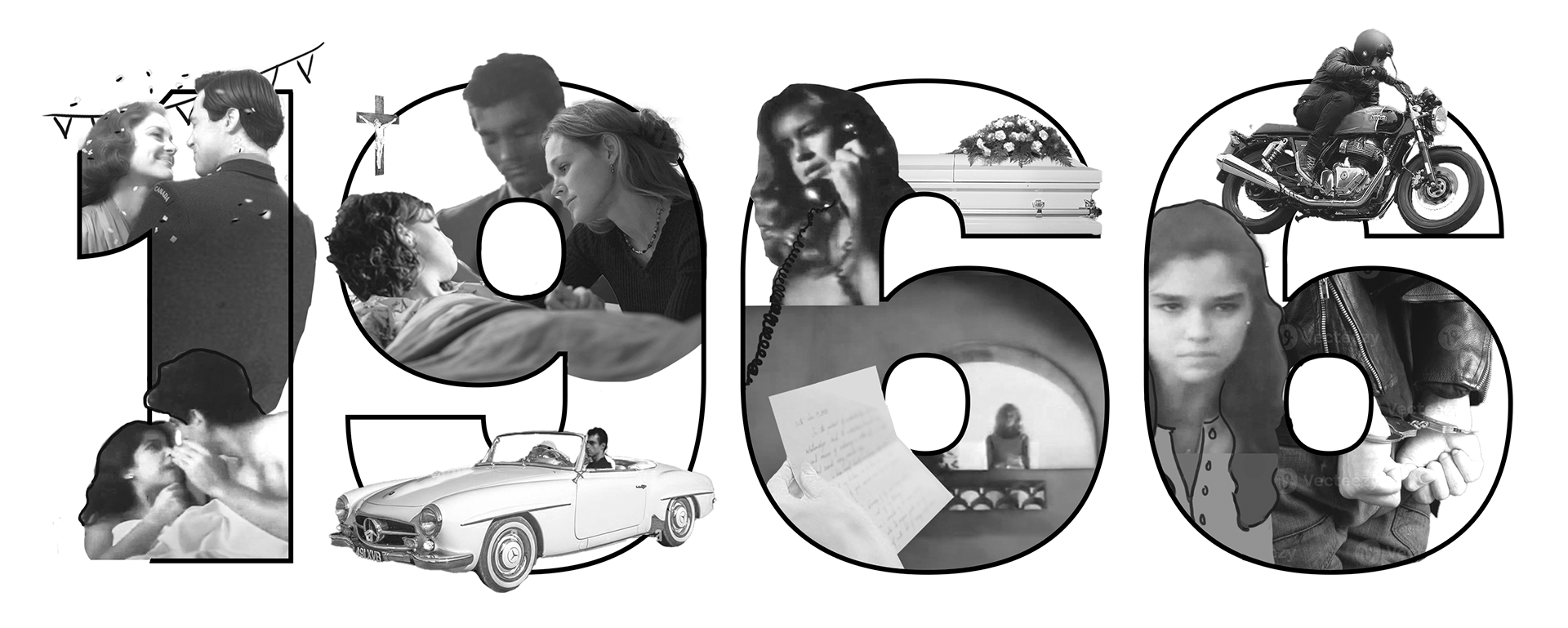
Together, these scenes reveal the fragile illusions that connect love, ambition, and social class.
APPEARANCE
The first scene takes place during a summer party in the wealthy neighborhood of San Gervasio, where Pijoaparte meets Maruja. Both pretend to belong to a different social world: he tries to appear as a confident bourgeois gentleman, while she hides that she works as a maid. Their brief relationship ends when Pijoaparte discovers the truth about her social status, revealing how important appearances and social perception are in their world.
ACCIDENT AND ENCOUNTER
After Maruja suffers an accident and is hospitalized, Pijoaparte meets Teresa during the summer in Barcelona. Teresa, who feels disconnected from her wealthy family, sees him as a symbol of authenticity and rebellion. She imagines him as a revolutionary worker who represents the ideals she admires, building a relationship based more on projection and fantasy than on reality.
DEATH AND SEPARATION
Months later, Maruja dies and the situation becomes more complicated. Teresa’s parents, worried about her relationship with Pijoaparte, force her to leave Barcelona and stay at the family’s beach house. She continues writing letters to him, but they fall into the hands of La Jeringa, a girl from his neighborhood who secretly loves him, and whose jealousy begins to change the course of the story.
DESTINY
Determined to see Teresa again, Pijoaparte steals a motorcycle and tries to find her, but the plan fails when La Jeringa reports him to the police. He is arrested and spends two years in prison. After his release, he searches for Teresa, only to discover that she has married and moved on, confirming that the social distance between them was always impossible to overcome.



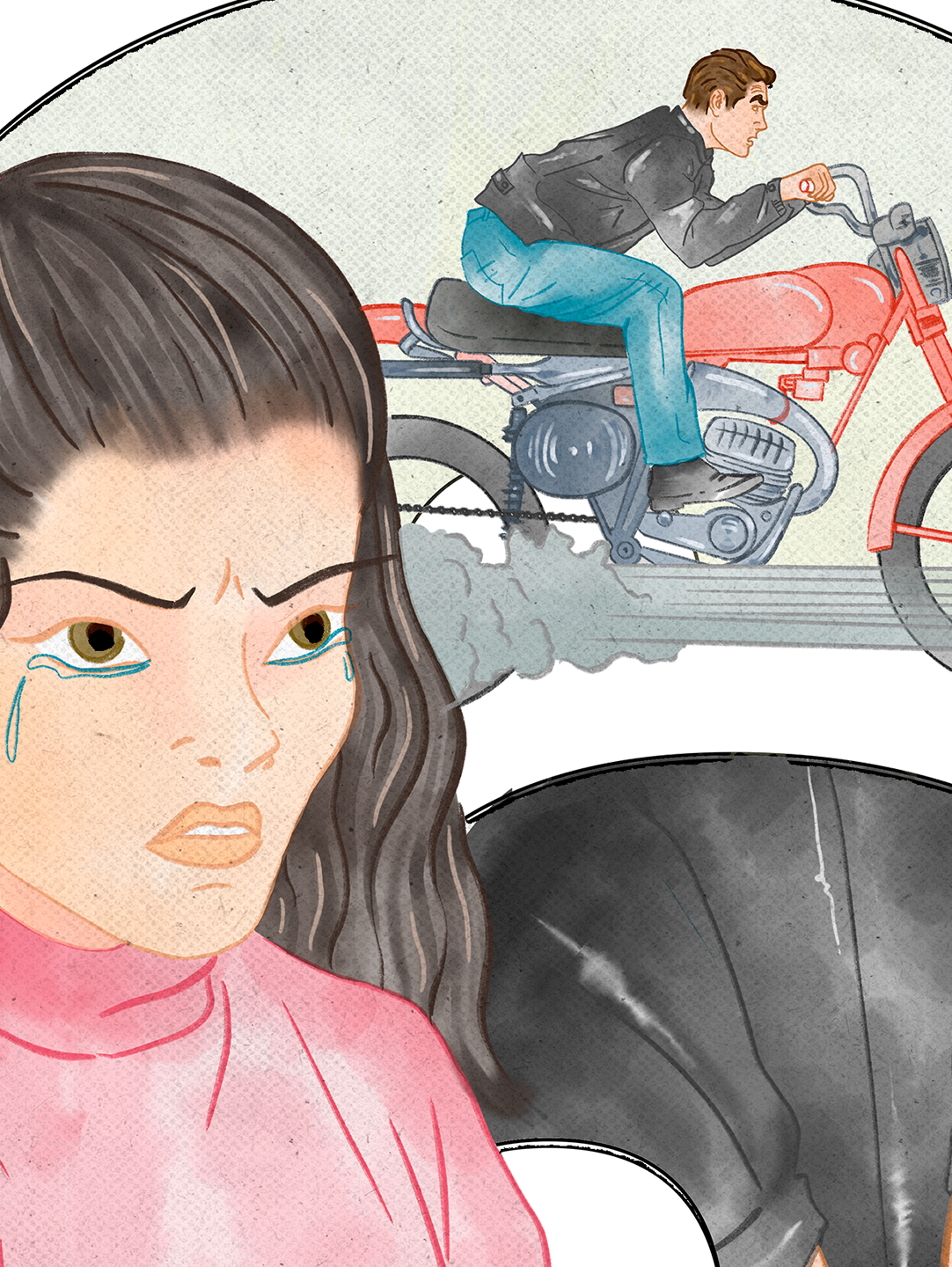
The illustration was later adapted into the visual language of the campaign and translated into motion graphics for digital platforms. The animated version was used in paid Instagram placements, extending the visual narrative of the book within the centenary communication of Casa del Libro.
Here you can discover which books defined the 1960s.
1975 | El Otoño del Patriarca | Gabriel García Márquez
Power, decay, and the loneliness of authority
Published in 1975, El otoño del patriarca by Gabriel García Márquez explores the life of a dictator in a fictional Latin American country. Through a fragmented narrative filled with memories and time shifts, the novel reflects on the nature of absolute power and the deep isolation that often accompanies it.
The story follows the patriarch as he rises to power, faces betrayal and rebellion, and slowly watches his empire fall apart. Throughout the novel, García Márquez presents a portrait of authority shaped by corruption, fear, and solitude.
From the analysis of the novel, four narrative moments guided the visual development of the illustration:
RISE TO POWER | UPRISINGS AND BETRAYALS | THE TRAGEDY | THE AUTUMN
Each of these moments guided the visual development of the illustration.
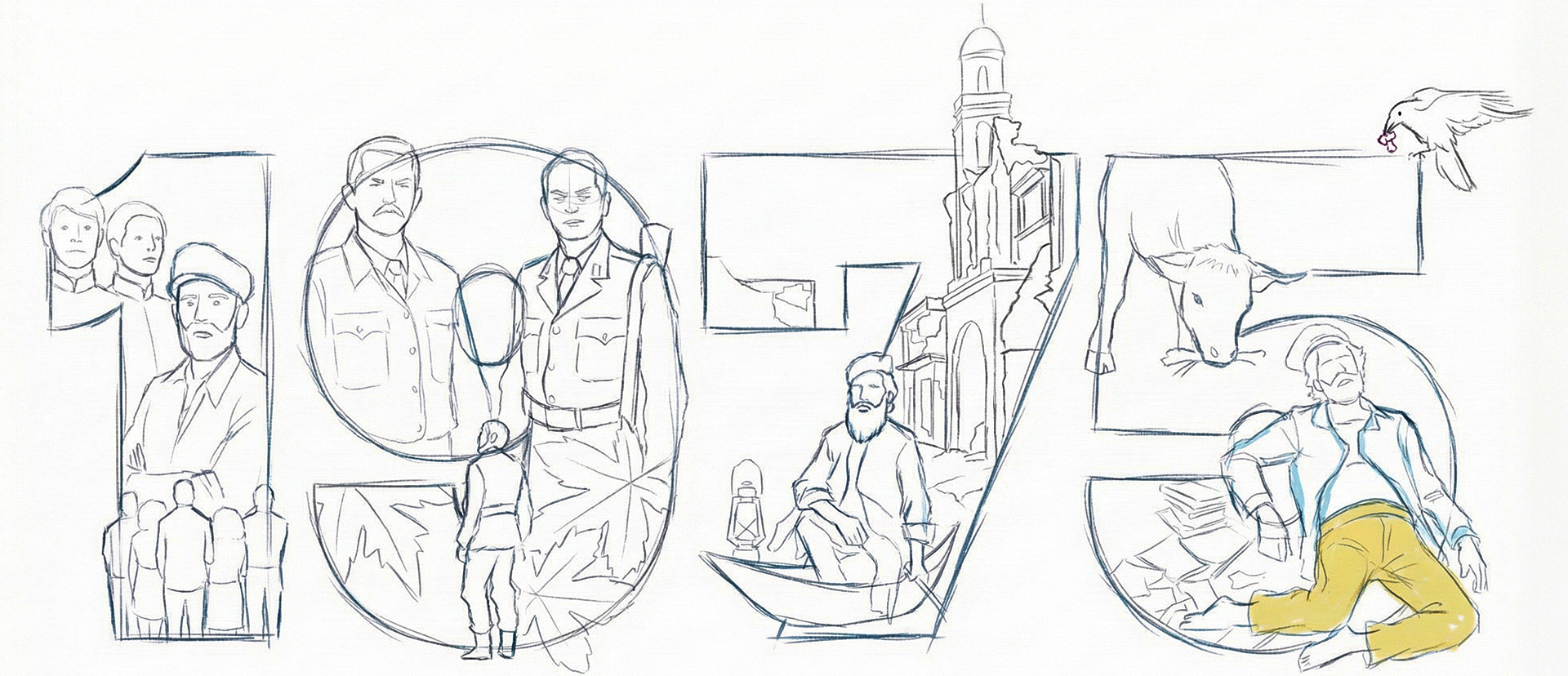
Through these scenes, the story traces the rise and inevitable decline of absolute power.
RISE TO POWER
The first scene shows the moment when the patriarch consolidates his power through a military coup supported by foreign interests. Despite lacking formal education, he demonstrates a strong instinct for control and negotiation, establishing the foundation of a regime built on political manipulation and violence.
UPRISINGS AND BETRAYALS
As the patriarch continues in power, tensions grow among those closest to him. Rebellion and distrust become constant within the regime. Conflicts emerge when General Rodrigo de Aguilar challenges his authority and when Patricio Aragonés secretly plans to betray him, revealing how power creates fragile loyalties and unstable alliances.
THE TRAGEDY
A devastating cyclone destroys the city and becomes a turning point in the story. After the storm leaves destruction across the land, the patriarch travels through the devastated landscape to see the damage. The disaster symbolizes the collapse of the regime’s control and opens a moment of reflection about responsibility and the possibility of rebuilding.
THE AUTUMN
The final scene shows the end of the patriarch’s life and the decline of his regime. After decades in power, he is found abandoned in his ruined palace, surrounded by decay and animals roaming the building. His death becomes a symbol of the inevitable fall of tyranny and the isolation created by absolute power.
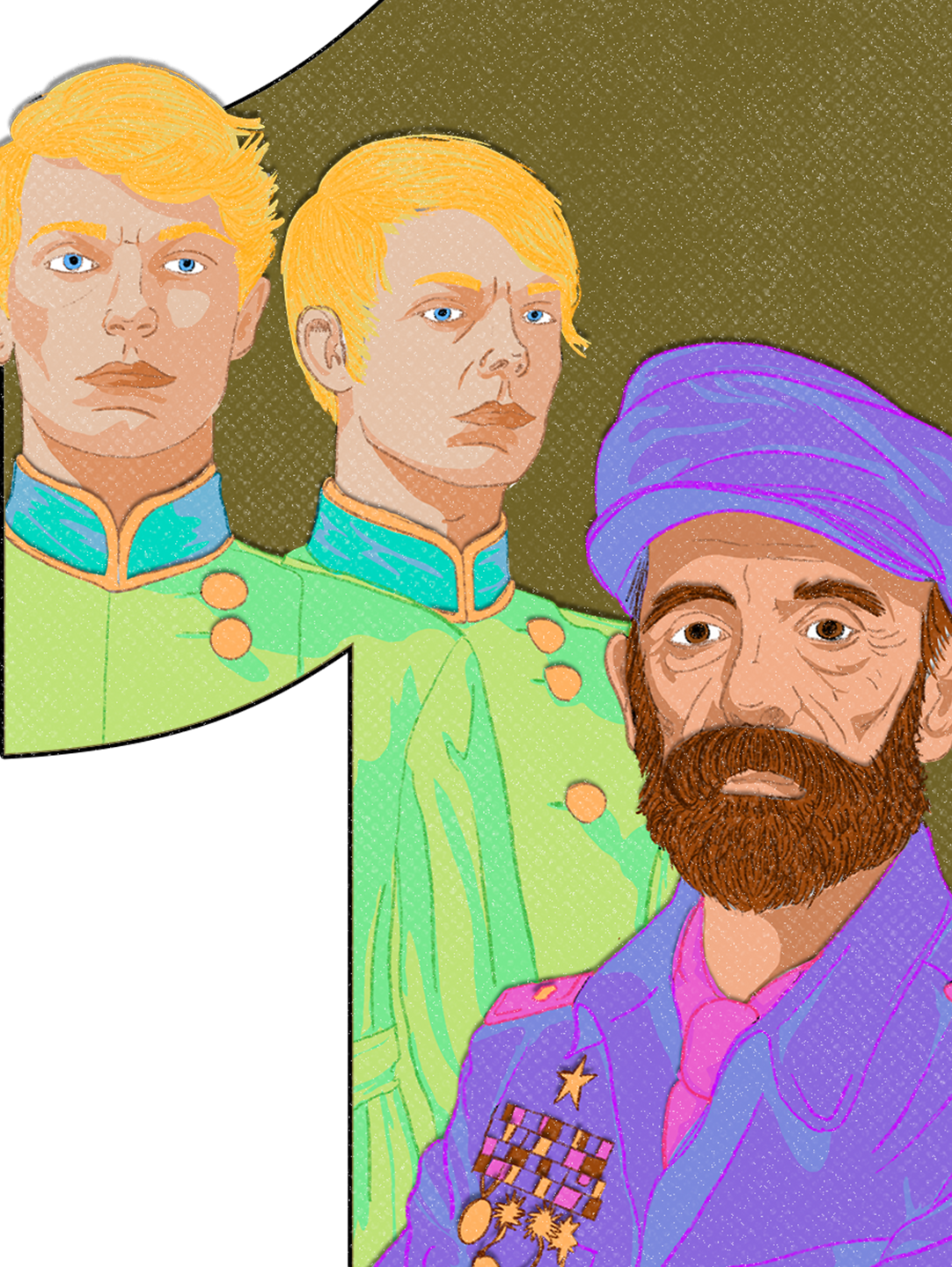

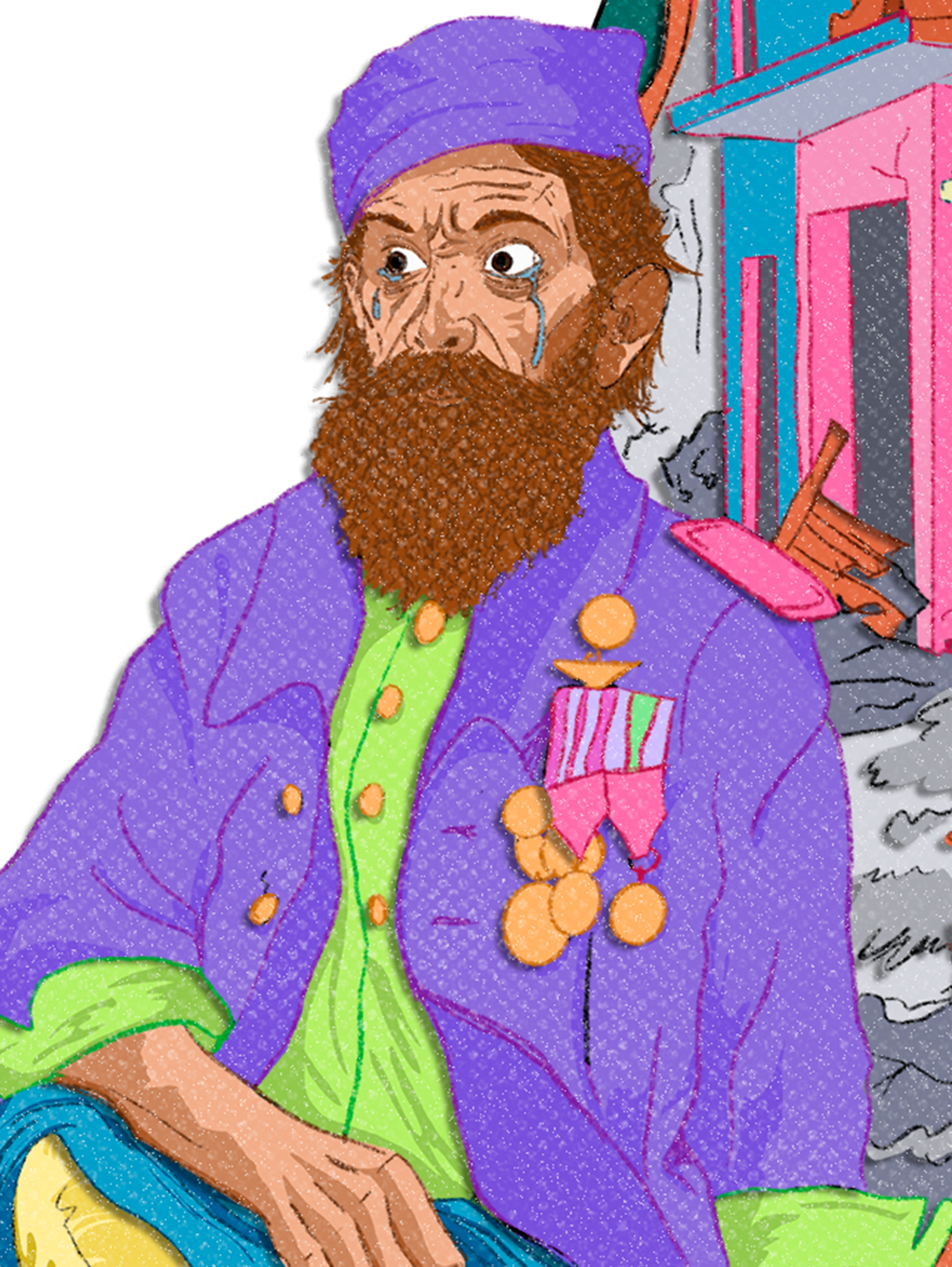
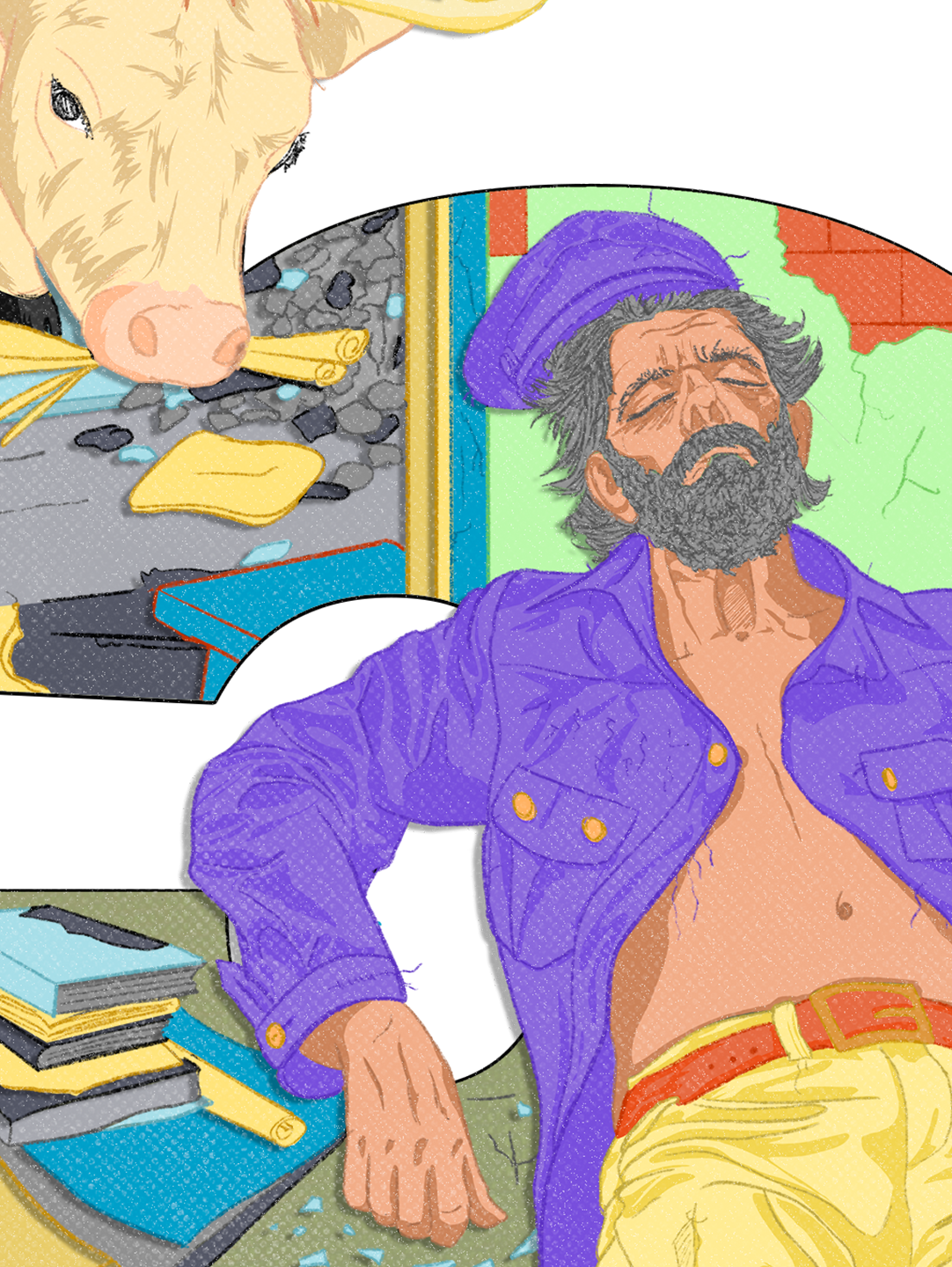
The illustration was later adapted into the graphic language of the campaign and translated into motion graphics for digital platforms. The animated version was used in paid Instagram placements, helping extend the visual storytelling of the book within the centenary campaign of Casa del Libro.
Here you can discover which books defined the 1970s.
1982 | El Hobbit | J. R. R. Tolkien
Adventure as a path to transformation
Published in 1937 and first released in Spanish in 1982, The Hobbit by J.R.R. Tolkien tells the story of Bilbo Baggins, a quiet hobbit who unexpectedly becomes part of an epic journey. What begins as a reluctant adventure soon turns into a path of discovery where Bilbo faces dangers, meets strange creatures, and slowly learns to trust his own courage.
Throughout the story, the character evolves from a cautious observer into an active participant in the fate of Middle-earth. His journey becomes a metaphor for personal growth, showing how leaving one’s comfort zone can reveal hidden strength and resilience.
From the narrative of the book, four key moments structured the illustration:
THE CALL TO ADVENTURE | DISCOVERY OF THE RING
THE BATTLE OF SMAUG | THE FIVE ARMIES
Each of these moments guided the visual development of the illustration.
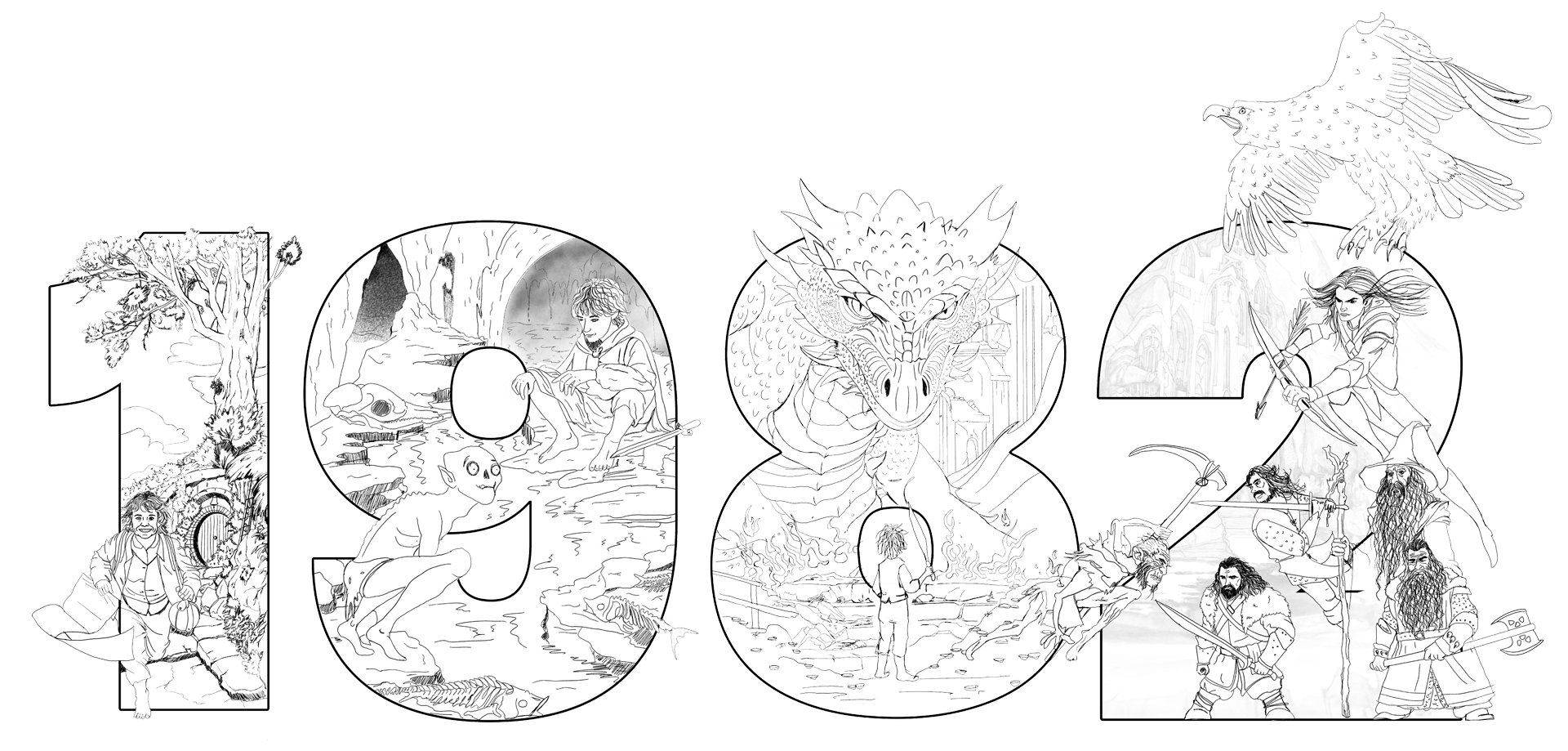
These moments create a visual journey that follows Bilbo’s transformation from an ordinary hobbit into an unlikely hero.
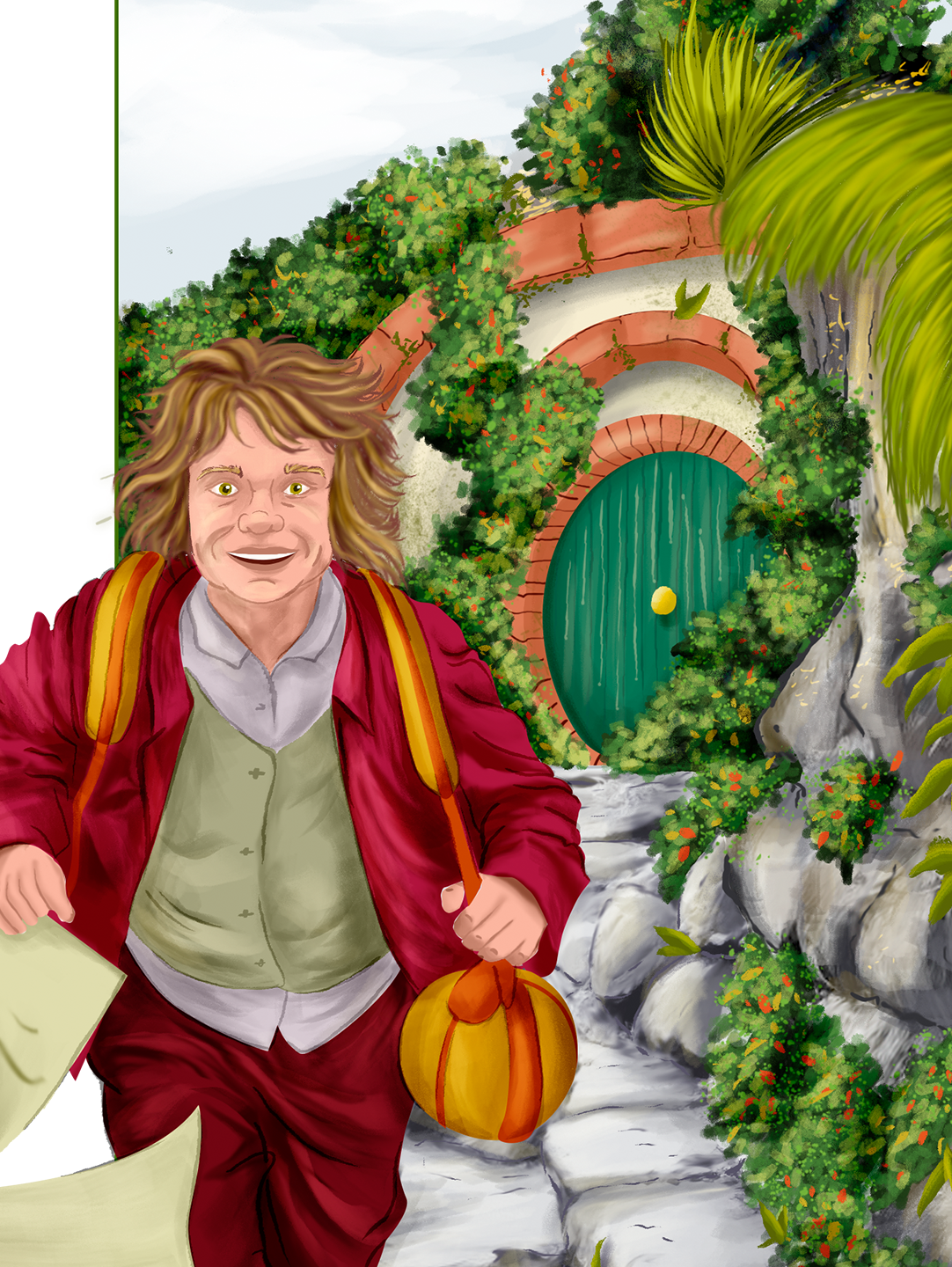
THE CALL TO ADVENTURE
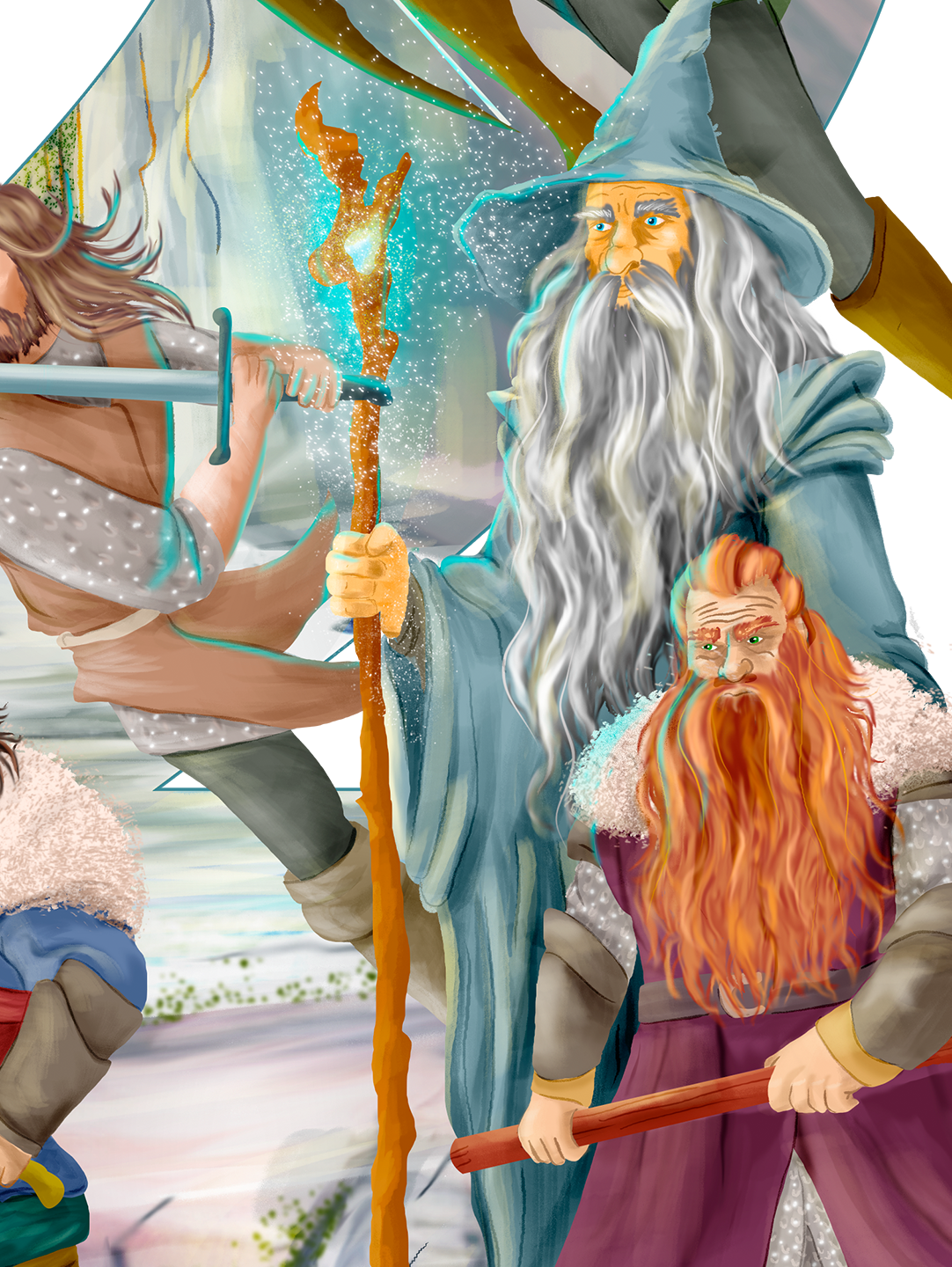
The story begins when Gandalf and a group of dwarves invite Bilbo to join their quest to reclaim the treasure of the Lonely Mountain. At first he hesitates, since his life has always been peaceful and predictable. Accepting the journey becomes the first step in his transformation, marking the moment when curiosity begins to overcome fear.
DISCOVERY OF THE RING
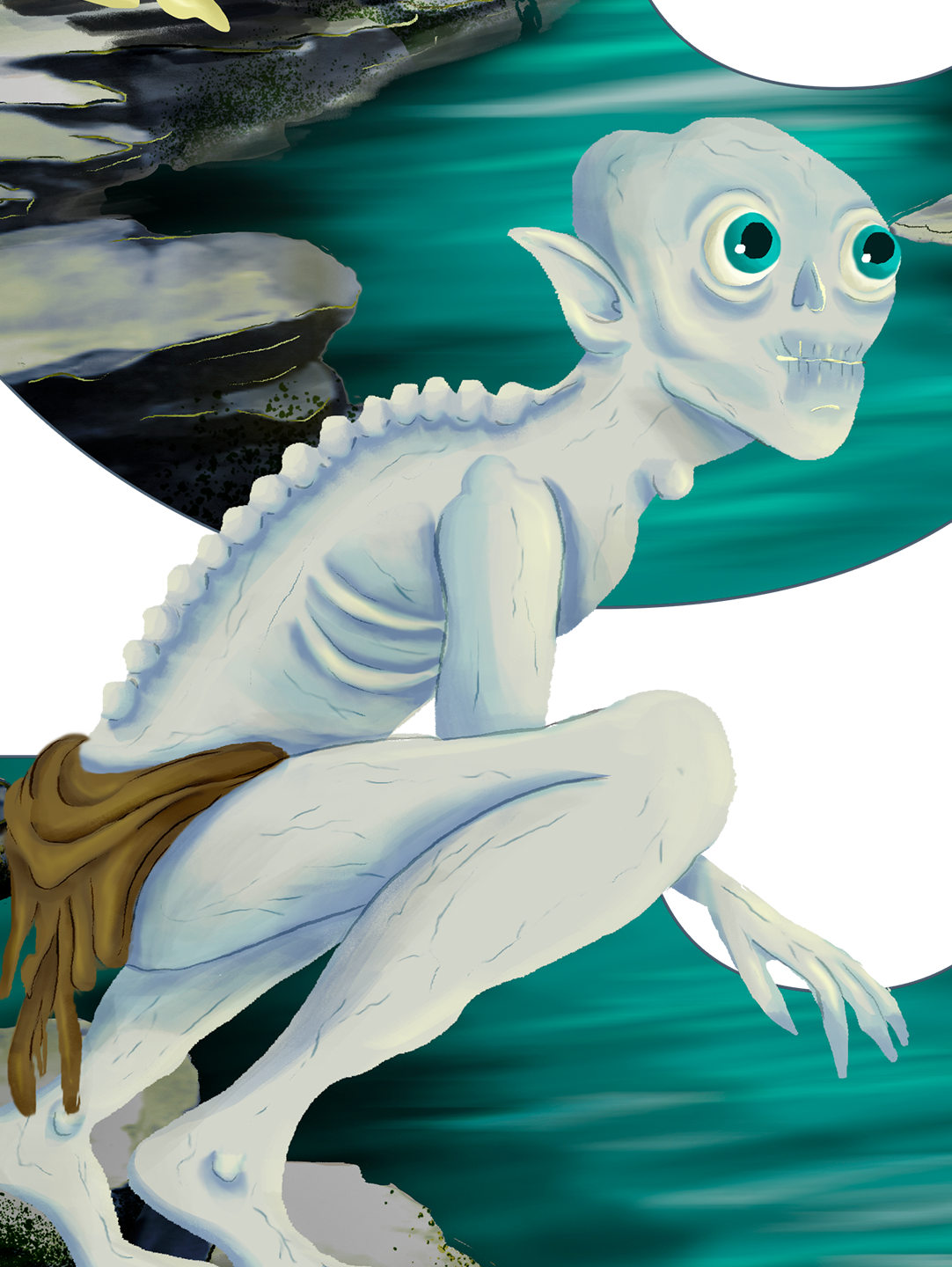
During the journey, Bilbo gets lost in a dark cave and meets Gollum. To survive, they play a game of riddles that tests his intelligence. During this encounter, Bilbo finds a magical ring that makes him invisible, an object that later becomes key to future events in Middle-earth.
THE BATTLE OF SMAUG
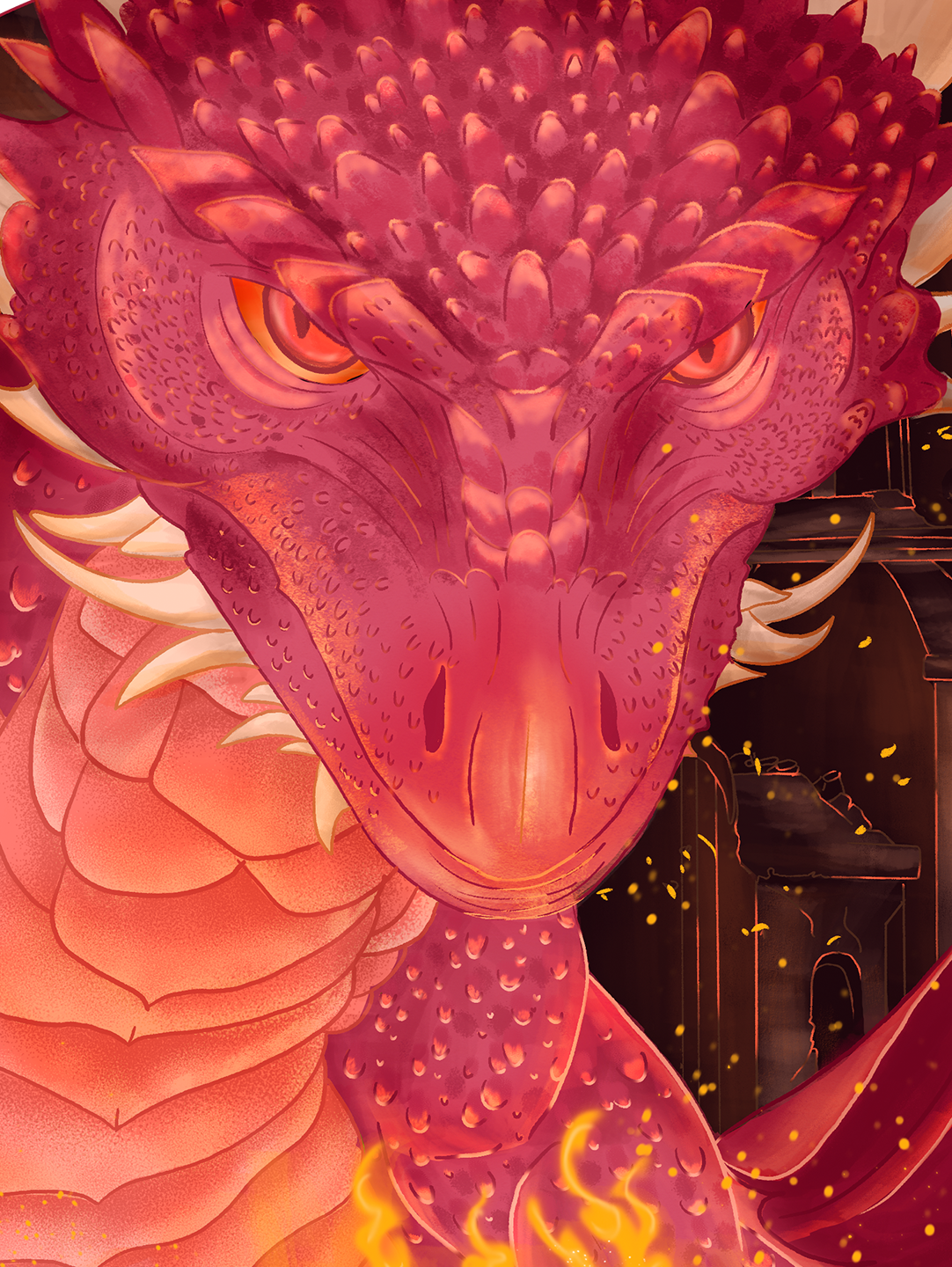
After many challenges, Bilbo and the dwarves reach the Lonely Mountain, where the dragon Smaug guards the treasure. When Bilbo secretly steals a piece of it, Smaug awakens in fury. This moment becomes a turning point that triggers events affecting both the characters and the balance of power in the region.
THE FIVE ARMIES
The story ends with the Battle of the Five Armies, where elves, men, dwarves, goblins and wargs fight near the Lonely Mountain for control of the treasure. Although the battle brings great loss, including the death of Thorin Oakenshield, it also creates new alliances and leads to a shared resolution of the conflict.
The illustration was later adapted into the visual language of the campaign and translated into motion graphics for digital platforms. The animated version was used as paid content on Instagram, extending the visual storytelling of the book within the centenary communication of Casa del Libro.
Here you can discover which books defined the 1980s.
1992 | Corazón tan Blanco | Javier Marías
Secrets, silence, and the weight of what remains unspoken
Published in 1992, Corazón tan blanco by Javier Marías explores how hidden truths and family secrets can shape people’s lives across generations.
The story follows Juan, an interpreter who begins to reflect on his family’s past after his marriage. As he translates conversations between political leaders, he becomes aware of how language can reveal or hide meaning, while fragments of a tragic family history slowly emerge. The story reflects on memory, secrecy, and the consequences of things that are said, and things that are intentionally left unsaid.
From the analysis of the novel, four narrative ideas structured the visual development of the illustration:
SECRETS | LISTENING | INHERITANCE | REVELATION
Each of these moments guided the visual development of the illustration.
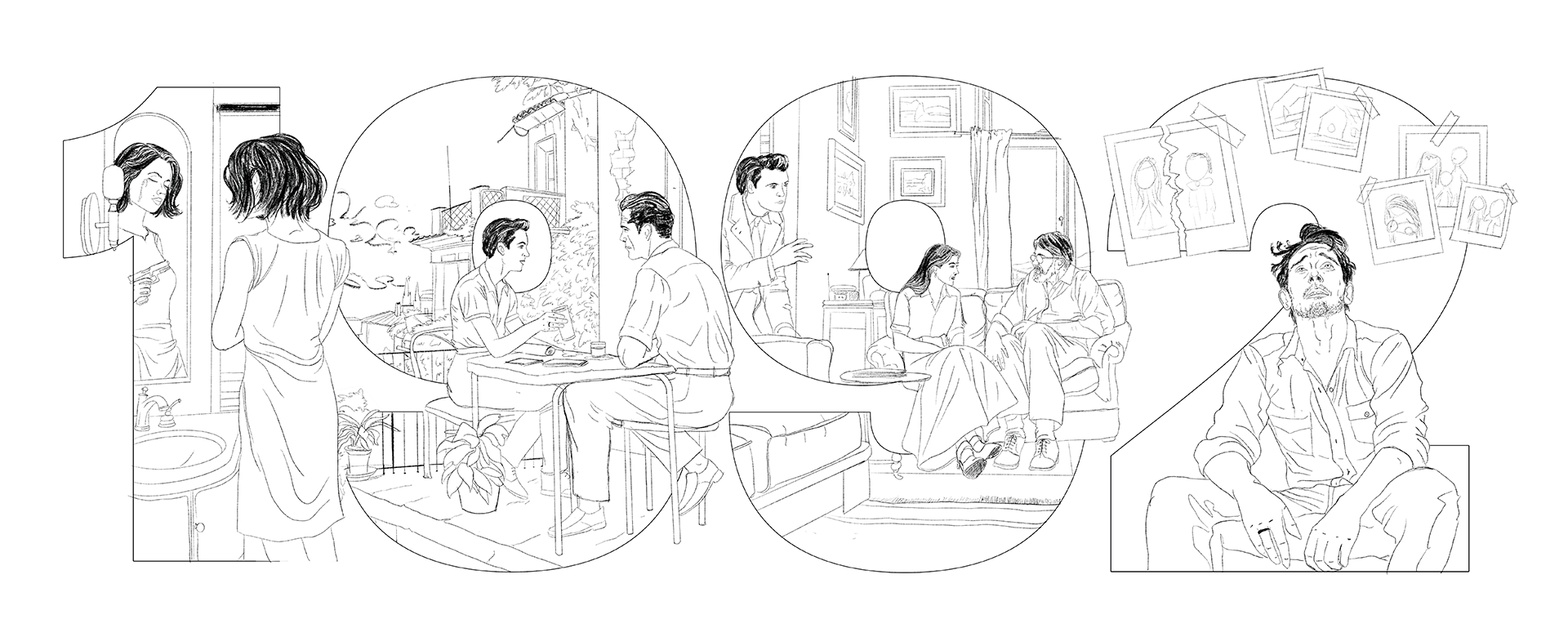
These scenes gradually uncover the quiet tension between what is known and what remains hidden.
SECRETS
At the center of the novel is a family secret: the suicide of Juan’s aunt shortly after her wedding. For years, the reasons remain unspoken. The scene represents the origin of a silence that extends across generations, showing how a hidden event can continue to shape the lives of those who never speak about it.
LISTENING
Juan works as a professional interpreter, translating conversations between world leaders during international meetings. His role places him in a position of constant listening and observation. This becomes symbolic in the story, showing how meaning can change depending on what is emphasized, omitted, or interpreted differently.
INHERITANCE
As the story unfolds, Juan realizes how his family’s past continues to influence the present. The decisions and secrets of previous generations shape the relationships and fears of the characters, showing how memory and hidden history continue to affect their choices.
REVELATION
Near the end of the story, Juan finally understands the truth behind the event that had remained hidden for so long. The realization comes gradually through reflection, changing the way he sees his father, his marriage, and the history of his family.

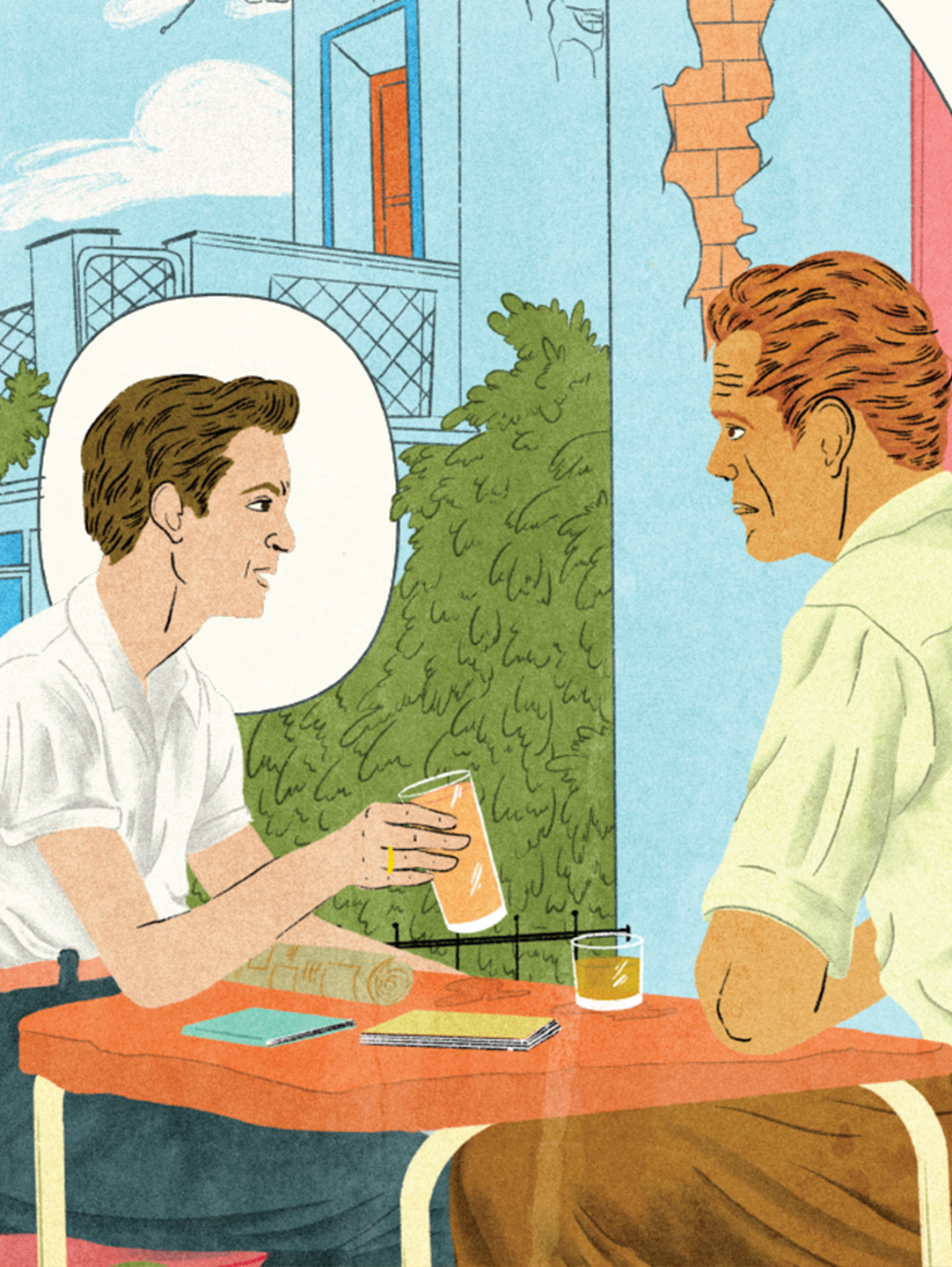
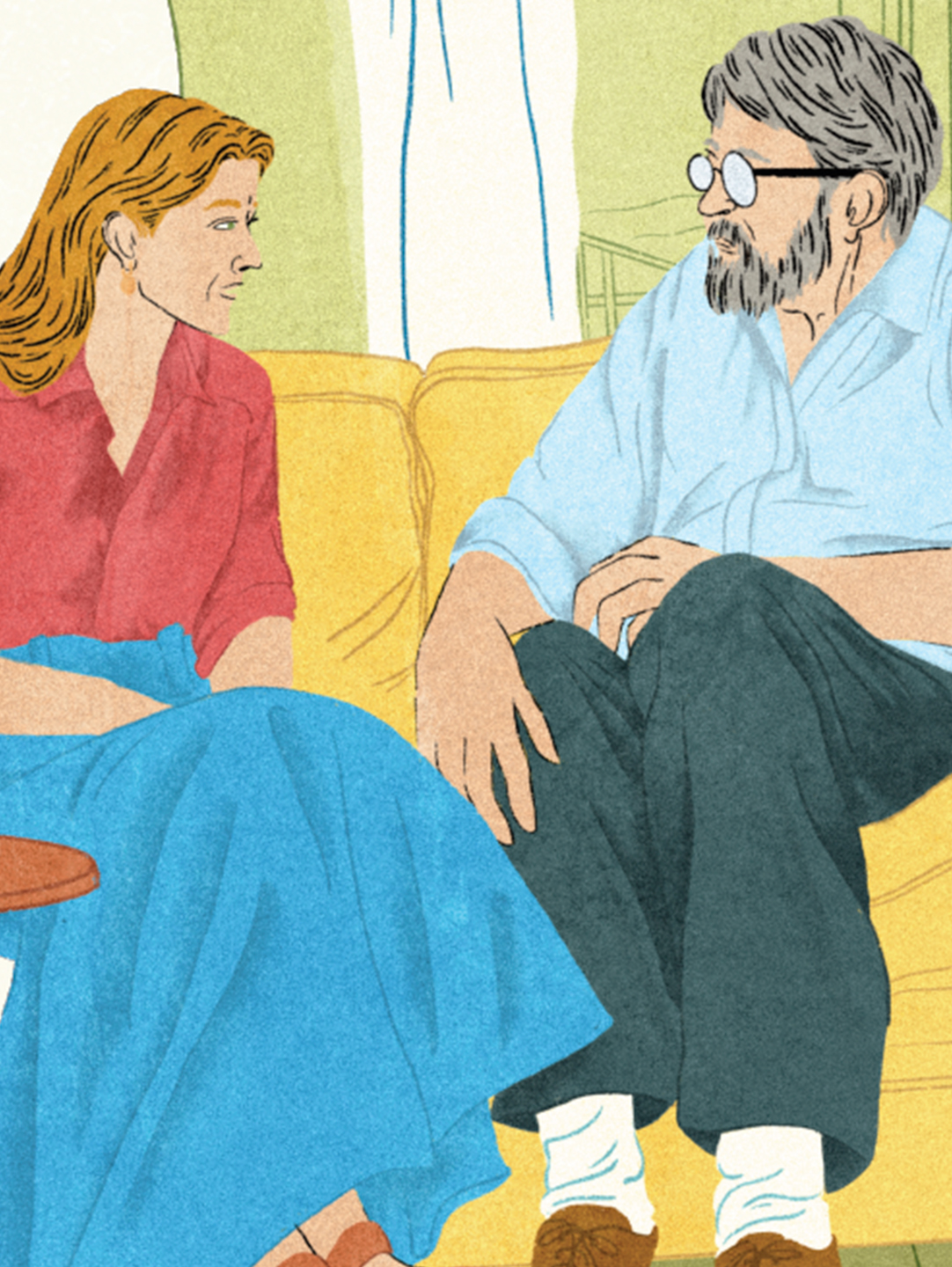
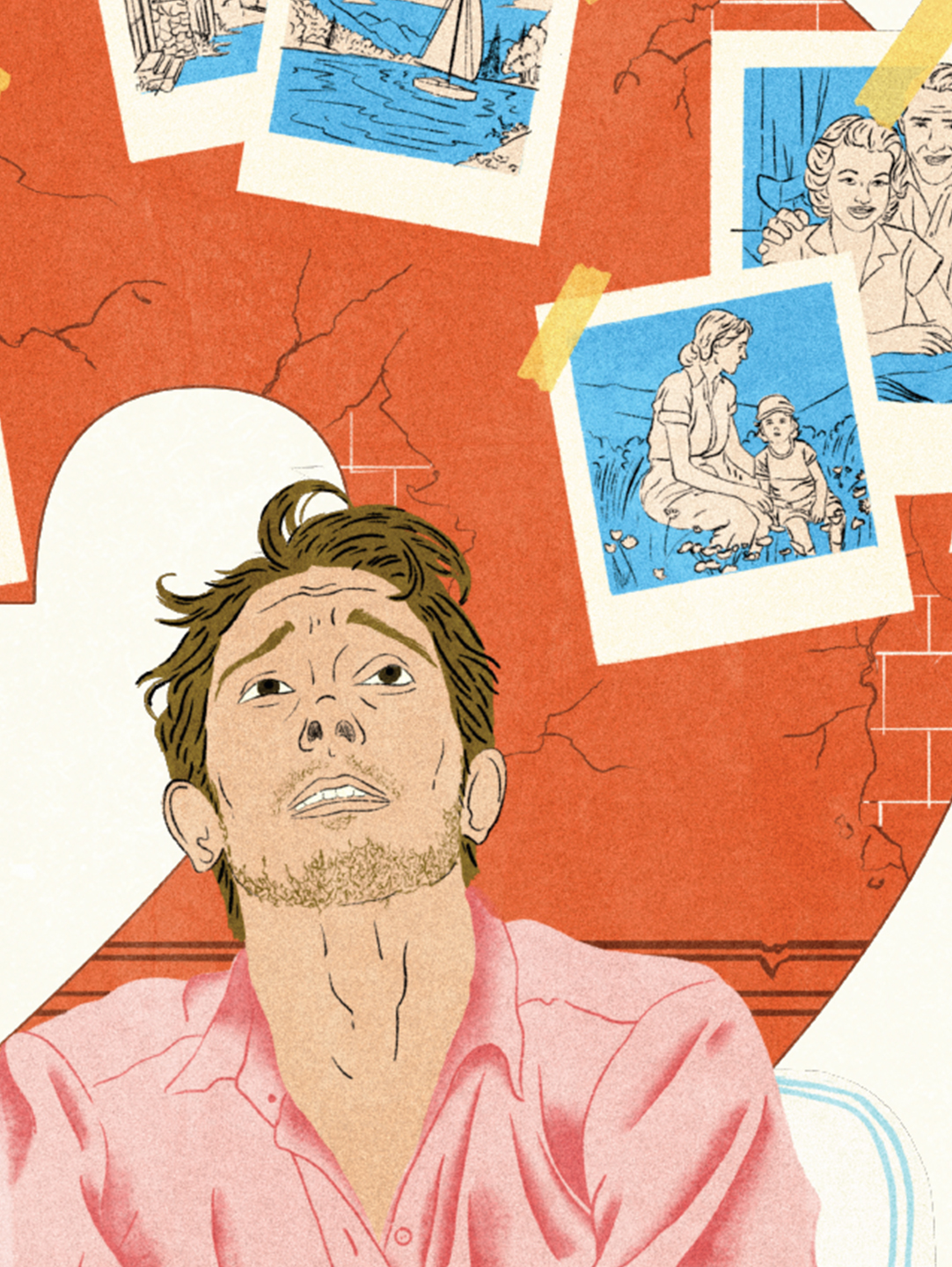
The illustration was later adapted into the visual system of the campaign and translated into motion graphics for digital platforms. The animated version was used as paid content on Instagram, extending the visual storytelling of the book within the centenary communication of Casa del Libro.
Here you can discover which books defined the 1990s.
Throughout the year, each new illustration was released as part of the centenary celebration.
The visuals appeared in digital platforms, outdoor formats, and communication pieces connected to Casa del Libro’s anniversary. Together, the series created a visual tribute to one hundred years of literature and to the readers who have been part of that journey.
The campaign became a way to celebrate not only the history of Casa del Libro, but also the lasting relationship between books and the people who read them.
